 Industry Insights cross industry
 When Your Best Leads Call After Hours and Nobody Answers
 Help Genie
 A pipe bursts at 9 PM. A hotel guest needs to extend their stay at 11 PM. A homeowner decides at 6:30 AM that today is the day they finally call about that roof leak. In every case, the customer picks up the phone and calls a business that closed hours ago. The phone rings. Nobody answers. The customer hangs up and searches for someone who will.
Home service businesses miss around 27% of all inbound calls according to Invoca research. That number includes both business hours and after hours, but the after-hours portion is where the revenue gap gets painful. During business hours, a missed call might mean a busy receptionist or a technician who could not get to the phone in time. After hours, it means zero coverage. Every single call goes unanswered.
The Size of the Gap
To understand the after-hours revenue gap, start with how businesses actually handle their phones. The numbers from AMBS Call Center research paint a bleak picture of inbound call handling across service industries.
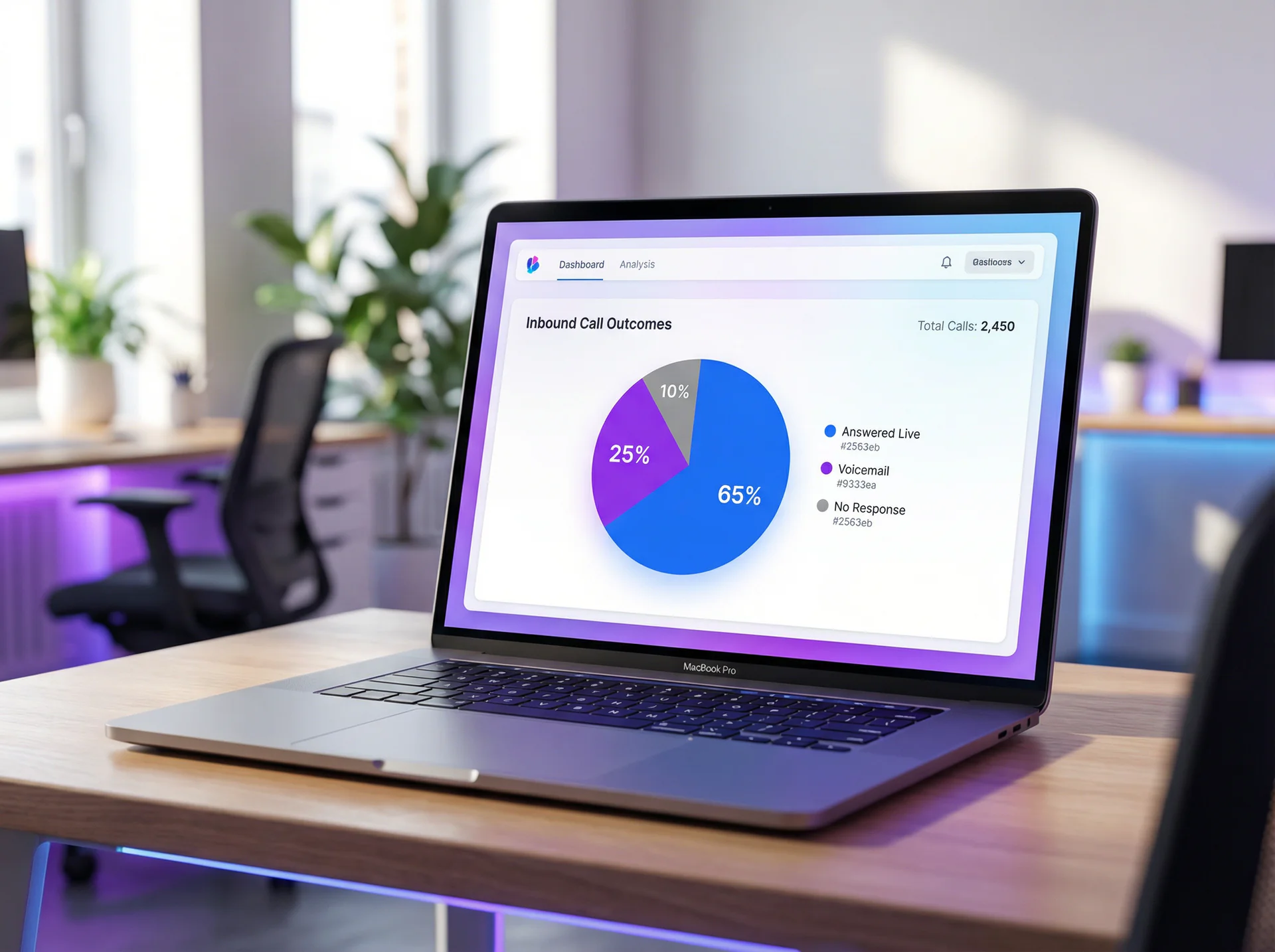
Businesses answer only 37.8% of all inbound calls with a live person. Another 37.8% go to voicemail. The remaining 24.3% get no response at all. No answer, no voicemail, no callback. Nearly a quarter of all inbound calls simply vanish.
Those numbers get dramatically worse after 5 PM. During business hours, most companies at least have someone near a phone. After hours, the only thing between a customer and silence is a voicemail greeting. And voicemail is where leads go to die.
| Call Outcome | % of All Calls | Revenue Impact |
|---|---|---|
| Answered live | 37.8% | Full conversion opportunity |
| Sent to voicemail | 37.8% | 80-85% of callers hang up without a message |
| No response at all | 24.3% | Complete loss of lead and marketing spend |
The Voicemail Myth
Most business owners believe voicemail is an acceptable safety net. “They’ll leave a message and I’ll call them back in the morning.” The data says otherwise.
Research from Dialzara and Ring Eden confirms that 85% of customers who reach voicemail hang up without leaving a message. A separate analysis from Ring Eden puts the number at 80% of calls going to voicemail that do not result in a message. Either way, the conclusion is the same: voicemail does not capture leads. It loses them.
For a plumbing business that receives 20 after-hours calls per week, voicemail captures maybe 3 or 4 messages. The other 16 or 17 callers hang up and call someone else. At $1,200 per missed call according to Invoca’s cross-industry analysis, that is $19,200 to $20,400 in lost revenue every single week from after-hours calls alone.
The Urgency Factor
After-hours calls are not just more numerous than business owners expect. They are more valuable. The reason is urgency.
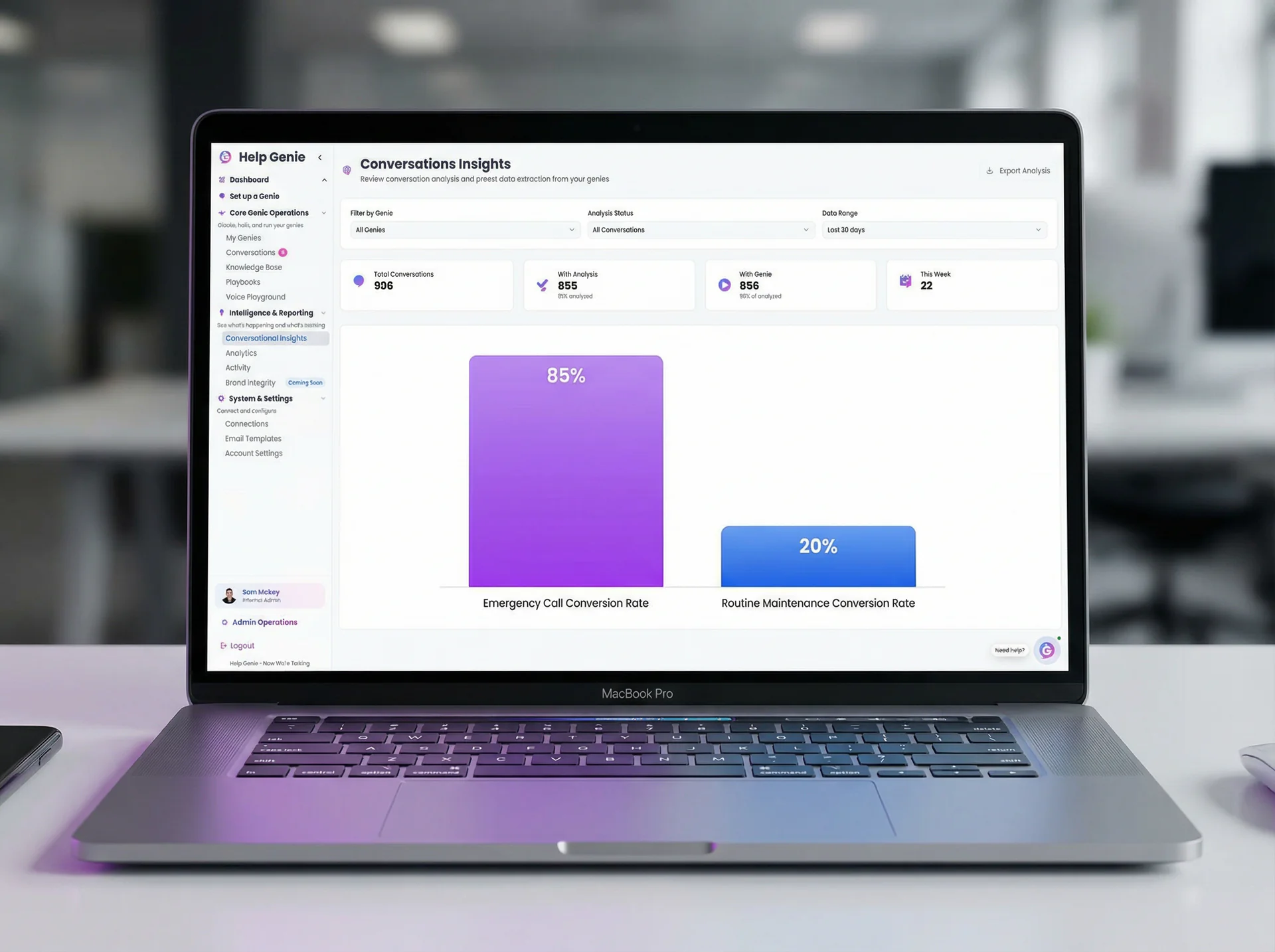
HouseCallPro data shows that 58% of home service calls involve some level of urgency or emergency. After hours, that percentage climbs even higher because routine maintenance calls tend to happen during business hours while emergencies happen whenever they happen. A burst pipe does not wait for Monday morning. A broken AC unit in July does not care that it is 10 PM.
Industry-Specific After-Hours Losses
The after-hours revenue gap hits every service industry, but the dollar amounts and patterns vary. Here is what the data shows for each sector.
Plumbing
The average plumbing business misses 28% of incoming calls according to data tracked by Suzee AI. For a mid-size plumbing company handling 15 to 20 calls per day, that is 4 to 6 missed calls daily. After hours, the miss rate approaches 100% for businesses without answering services or voice genies.
Plumbing businesses face a unique after-hours dynamic: their most expensive service calls are emergencies that happen at night and on weekends. A burst pipe at 2 AM is a $600 to $1,500 job. A sewer backup on Sunday morning runs $400 to $1,000. These calls go to the first company that answers.
HVAC
Each missed HVAC call costs contractors an average of $180 in lost revenue according to Smith.ai data. That average includes both routine maintenance calls and emergency calls. For after-hours emergency calls during extreme weather, the value per call increases three to five times.
HVAC contractors see their highest call volumes during the first extreme temperature days of each season. The first 95-degree day in June and the first freeze in November generate call spikes that overwhelm staff during the day and go entirely unanswered after hours. Voice genies capture those calls and book the appointments that drive seasonal revenue.
Healthcare
The healthcare sector faces its own version of the after-hours gap. According to healthcare industry studies, 67% of after-hours patient calls go unanswered. For practices, urgent care facilities, and specialty clinics, those unanswered calls represent patients who will either go to a competitor, visit an emergency room, or delay care entirely.
Automotive
Auto repair shops typically operate 8 AM to 6 PM, but customers discover car problems at all hours. The check engine light that comes on during the evening commute, the flat tire in a parking lot at 8 PM, the strange noise that finally convinces someone to call a mechanic on Saturday afternoon. These after-hours calls represent customers with active intent to book service. When nobody answers, they search for a shop that is open or that at least picks up the phone.
Hotels and Hospitality
Hotels that operate a front desk 24/7 still face after-hours coverage gaps when the night desk handles check-ins, guest requests, and phone calls simultaneously. During high-occupancy nights, reservation calls compete with in-house guest needs. Voice genies handle the reservation calls so front desk staff can focus on the guests standing in front of them.
The 83% Who Still Call
Despite the growth of online booking, text messaging, and chat widgets, phone calls remain the dominant channel for service businesses.
Service industry surveys show that 83% of homeowners still prefer to call when they need a contractor. The reasons are straightforward. A phone call lets the customer explain their problem, get an immediate sense of whether the company can help, and book a time. Online forms require waiting for a response. Chat widgets feel impersonal for urgent problems. The phone call remains the highest-intent, highest-value customer action.
That 83% preference makes the after-hours gap even more costly. The customers who call are the ones most ready to buy. And after hours, they are the ones most likely to reach voicemail and move on.
What Closing the Gap Looks Like
For a trades business booking an average of 8 jobs per day during business hours, capturing an additional 15 to 20% means 1 to 2 extra jobs per day from after-hours calls. At an average job value of $400, that is $400 to $800 in additional daily revenue, or $8,000 to $16,000 per month.
The math works because voice genies do more than answer the phone. They qualify the call, capture the details, check scheduling availability, and book the appointment. The customer gets the same experience they would get calling during business hours. The business gets revenue it was previously leaving on the table every single night and weekend.
Calculating Your After-Hours Revenue Gap
Here is a simple formula to estimate what the after-hours gap costs your specific business:
Monthly After-Hours Revenue Gap = (Monthly After-Hours Calls) x (% That Convert When Answered) x (Average Job Value)
For most service businesses:
- After-hours calls represent 30 to 40% of total inbound call volume
- Conversion rates when calls are answered range from 25 to 35%
- Average job values range from $150 (basic maintenance) to $1,500+ (emergency services)
A plumbing company receiving 400 calls per month might see 120 to 160 after-hours calls. At a 30% conversion rate and a $500 average job value, the after-hours revenue gap is $18,000 to $24,000 per month. That is revenue sitting on the table, available to any business that simply answers the phone.
The Competitive Reality
The after-hours revenue gap is not just about the money businesses leave uncaptured. It is about where that money goes. Every after-hours call that goes unanswered is a customer who calls the next business on the list. If that business answers, the customer books with them. The revenue does not disappear. It transfers to competitors.
For service businesses in competitive markets, after-hours phone coverage has become a differentiator as important as pricing, reviews, or location. The data is clear: customers call when they have a problem, they choose whoever answers first, and they do not leave voicemails. Businesses that cover their phones 24/7 capture the revenue. Businesses that do not cover after hours donate it to competitors who do.
Help Genie voice genies provide 24/7 phone coverage for service businesses across trades, automotive, and hospitality. Every after-hours call gets answered, qualified, and converted into a booked appointment while you sleep.
Keep exploring
Further reading and useful tools
AI vs Human Support: Who Actually Wins on Satisfaction?
AI-handled support now scores 97% CSAT, up from 78%. But 75% of customers still want a human for complex issues. See where each one wins.
Industry InsightsWhy the First 90 Seconds Decide Speed to Lead in 2026
Data on lead response time and conversion rates for service businesses. The companies that respond fastest win the most customers, and the window is shrinking.
GuideRoute Calls Across Locations in 7 Steps (No Missed Calls)
Set up AI call routing for multi-location businesses in 7 steps. Route by area code, time zone, and department from one dashboard, for 2 to 10 sites.
GuideHow to Connect Help Genie to Your CRM with Webhooks
Set up webhooks to send Help Genie conversation data, leads, and call events directly to Salesforce, HubSpot, or any CRM through Zapier, Make, or custom integrations.
ComparisonBest AgentZap Alternatives (2026)
Honest roundup of AgentZap alternatives for AI receptionists. Compare minute-based AI, flat-rate voice genies, and human answering services.
ComparisonBest Smith.ai Alternatives (2026)
Honest roundup of the top Smith.ai alternatives, from human answering services to flat-rate voice AI. Compare pricing models and find the right fit.
Help Genie
The Help Genie Team
The Help Genie team builds voice AI genies that resolve everyday support on their own — across phone, chat, web, and email — in your voice, 24/7. We write about what we learn shipping it to real businesses.
Building voice AI for 11+ industries, from trades to hospitality.
- voice AI
- customer support
- lead capture
- multi-channel genies