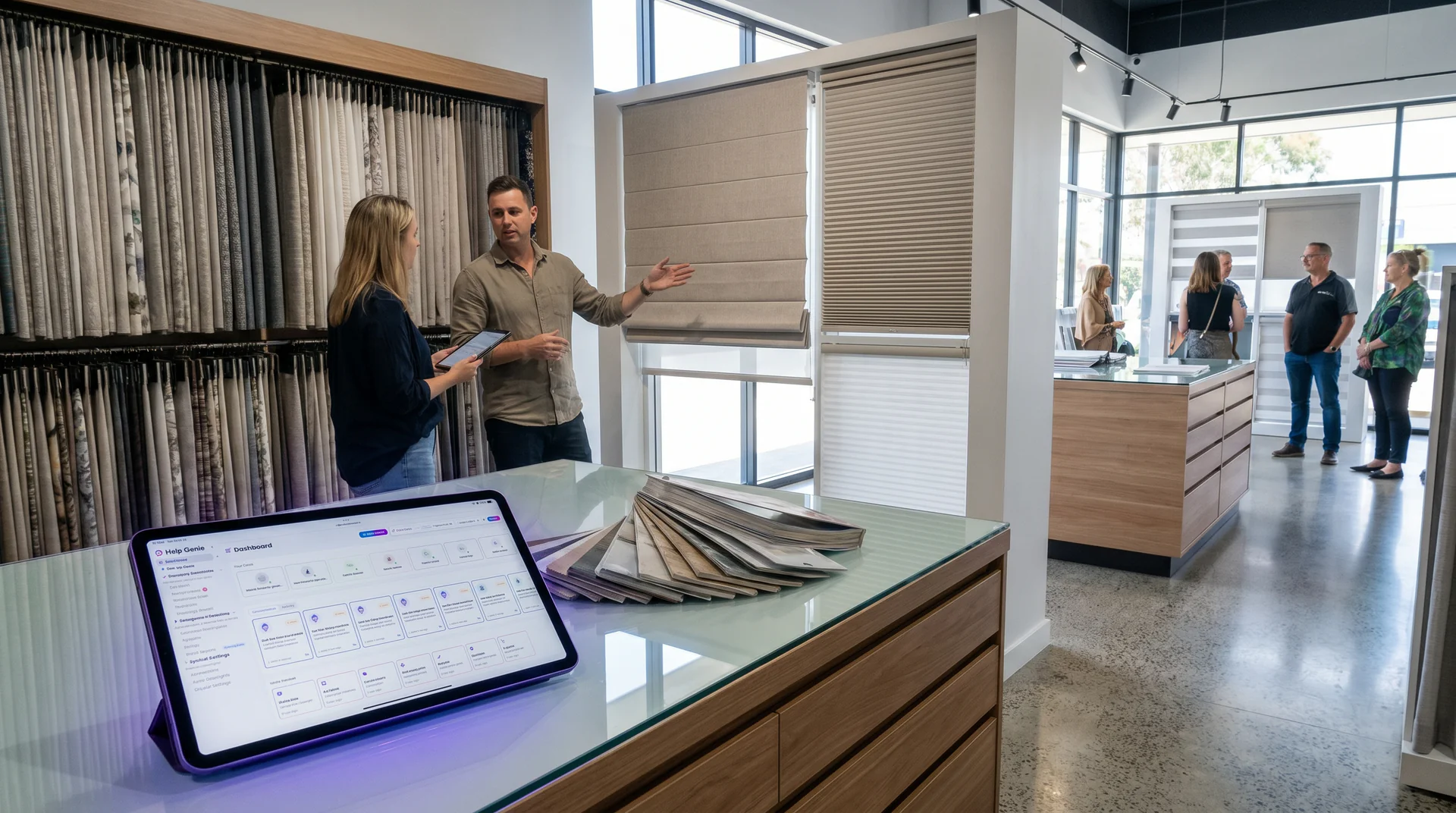
How a Window Shades Business Can Triage More Customer Support Calls with AI
Window shade dealers field a flood of fitting, fabric, and warranty questions. Here's how a voice genie triages them so the showroom team stays on selling.

The Phone Never Stops in a Window Shades Business
Anyone who has run a window furnishings showroom knows the rhythm. The phone rings while the installer is halfway through a Roman shade install. It rings again while you’re walking a customer through fabric samples. It rings a third time while you’re quoting a five-bedroom job over email.
Most of those calls are not the high-value ones. They’re support questions. “My remote won’t pair.” “Can these be cleaned with a damp cloth?” “Is there a warranty on the motor?” “When is my install booked again?” Each one is fair, each one needs a real answer, and each one pulls your best people away from selling and measuring.
This is the gap a voice genie was built to close. Not by replacing your team, but by triaging the questions that don’t need a human in the first place.
What Triage Actually Means for a Window Shades Business
Triage is a word borrowed from emergency rooms. It means sorting incoming demand by what it needs, not treating every case the same.
For a window covering business, the call mix is wider than people realise. On any given day a showroom phone fields:
Pre-sale questions. What do honeycomb cells cost versus rollers? Do you do motorised? Do you do commercial? Can you measure for a curved bay?
Booking questions. When is my consult? Can the measure happen on a Saturday? Is the installer running late?
Product support. My motor stopped responding. The chain on my Roman is jammed. The fabric on my blockout has a thread loose.
Warranty and returns. I’ve had these for two years and the colour has faded. The headrail is sagging. Are these covered.
Repeat business and referrals. I want to do the bedrooms next. My neighbour wants a quote.
These calls all matter. But they don’t all matter equally, and they don’t all need the owner or the senior salesperson to handle them. A voice genie sorts them into the right bucket within the first thirty seconds of the conversation.
Why Window Shades Customer Support Is Different From Other Trades
Window furnishings sit in an awkward middle ground. You’re part product retailer, part custom-fit specialist, part installer, part service provider. That makes your support load look nothing like a plumber’s and nothing like a fashion retailer’s.
A few things tend to be true across the industry.
Lead times are long. A customer who ordered roller blinds twelve weeks ago will call asking for an update. They are not buying right now, but they need a clear answer or they get nervous.
Products are technical. Motorised shades, smart home integration, double rollers, blockout liners, child-safety cordless mechanisms. A new staff member can’t field every product question on day one, and even experienced staff get caught out by older product lines.
Installs can go wrong. A bracket doesn’t fit a steel lintel. The fabric width is 6mm wider than the recess. The motor needs a different remote. These create urgent calls that need the right person.
The buying cycle is slow. A customer might call three or four times across two months before placing the order. Every one of those calls is a chance to lose them to a competitor who answered faster or sounded more confident.
Most window shades businesses run lean. Maybe one or two people in the showroom, one or two installers in vans, and a workroom team focused on cutting and assembling. There is no dedicated support desk. The phone gets answered by whoever is closest, which means the answer quality is uneven and the showroom is constantly being interrupted.
How a Voice Genie Triages a Window Shades Call
A well-configured genie answers within one ring with your business voice. Not a phone tree. Not a queue. A natural conversation that opens the same way a good receptionist would.
The first thing it does is figure out what kind of call this is. That single step removes most of the friction in your day.
For a sales enquiry, the genie qualifies the lead. What rooms are you covering? Roughly how many windows? Are you looking at blinds, shades, or curtains? Do you want motorised? Is this for a new build, a renovation, or a replacement? What’s your suburb so we know our service area? When would you ideally like the measure done? A qualified lead lands in your inbox as a structured summary, not a name and phone number on a sticky note.
For a product support question, the genie checks against your knowledge base. How to pair a remote. How to clean a fabric. What the warranty covers. What to do when a roller blind retracts unevenly. If the answer is documented, the customer gets it in conversation, immediately. If it isn’t, the genie captures the question with the right detail and routes it to whoever handles support.
For a booking enquiry, the genie looks up the customer, confirms their install date, and reads back the details. Customer calling to reschedule? It captures the new availability and flags it for the install coordinator.
For a warranty or complaint, the genie does not try to resolve it. It gathers the product details, install date, photos if relevant, and routes it as a priority follow-up. Nothing gets lost in voicemail and the customer hears that the business is on top of it.
For an urgent install issue, the genie escalates. Bracket not fitting, motor failure on the day, fabric defect found after install. These get flagged immediately to the install lead, not buried in a transcript queue.
By the time your team checks the genie’s dashboard mid-morning, they’re looking at a sorted list. Sales leads on one tab. Support questions on another. Bookings handled. Warranty cases flagged. The showroom team can focus on the customers who are actually in front of them.
The Day-to-Day Difference in the Showroom
The transformation is not glamorous, but it’s the kind of thing every window furnishings owner notices within a fortnight.
Your senior salesperson stops being yanked off a $4,000 quote to explain how to charge a battery wand. The installer in the van stops fielding the same “is my order ready” call three times a week from the same anxious customer. The owner stops staying back after 6pm to return a stack of voicemails about cordless safety queries.
Your customers also notice something different. They call, they get an immediate, calm answer. The genie sounds like your business because it speaks your products, your pricing, your warranty terms, and your service area. If it needs to escalate, it does it cleanly. The customer hangs up feeling looked after instead of stuck on hold.
This is the heart of what triage delivers. The right call, to the right person, with the right context. Nothing dropped. Nothing repeated. Nothing forgotten.
What This Looks Like for Different Window Shades Operations
Not every window furnishings business runs the same way, and the genie’s job changes with the model.
The owner-operator showroom. One or two senior salespeople, one installer, maybe a workroom partner. The genie is mostly there to absorb support calls so the salesfloor stays calm. Every sales enquiry still gets a human callback within the hour, because the owner wants to qualify the job personally. The big win is shaving off the dozens of small interruptions.
The multi-showroom dealer. Three to six locations, a central admin, a service team. The genie routes calls by location, captures structured leads, and feeds them into the right showroom’s pipeline. Support questions get answered consistently across stores, which is a problem multi-site dealers know all too well.
The commercial and design-trade specialist. Working with builders, architects, and interior designers. Calls are longer and more technical. The genie is configured to recognise trade customers, route their calls directly to the specifier they work with, and handle inbound trade-portal questions about lead times and current stock.
The motorisation and smart-home specialist. Heavy support load on integrations with Lutron, Somfy, Google Home, Apple Home. The genie carries deep product knowledge for the most common pairing and troubleshooting questions, and books service visits when the issue can’t be resolved over the phone.
The architecture is the same. The configuration is what makes the genie feel like it belongs to your specific business.
After-Hours Calls Are Where Window Shades Businesses Lose Most
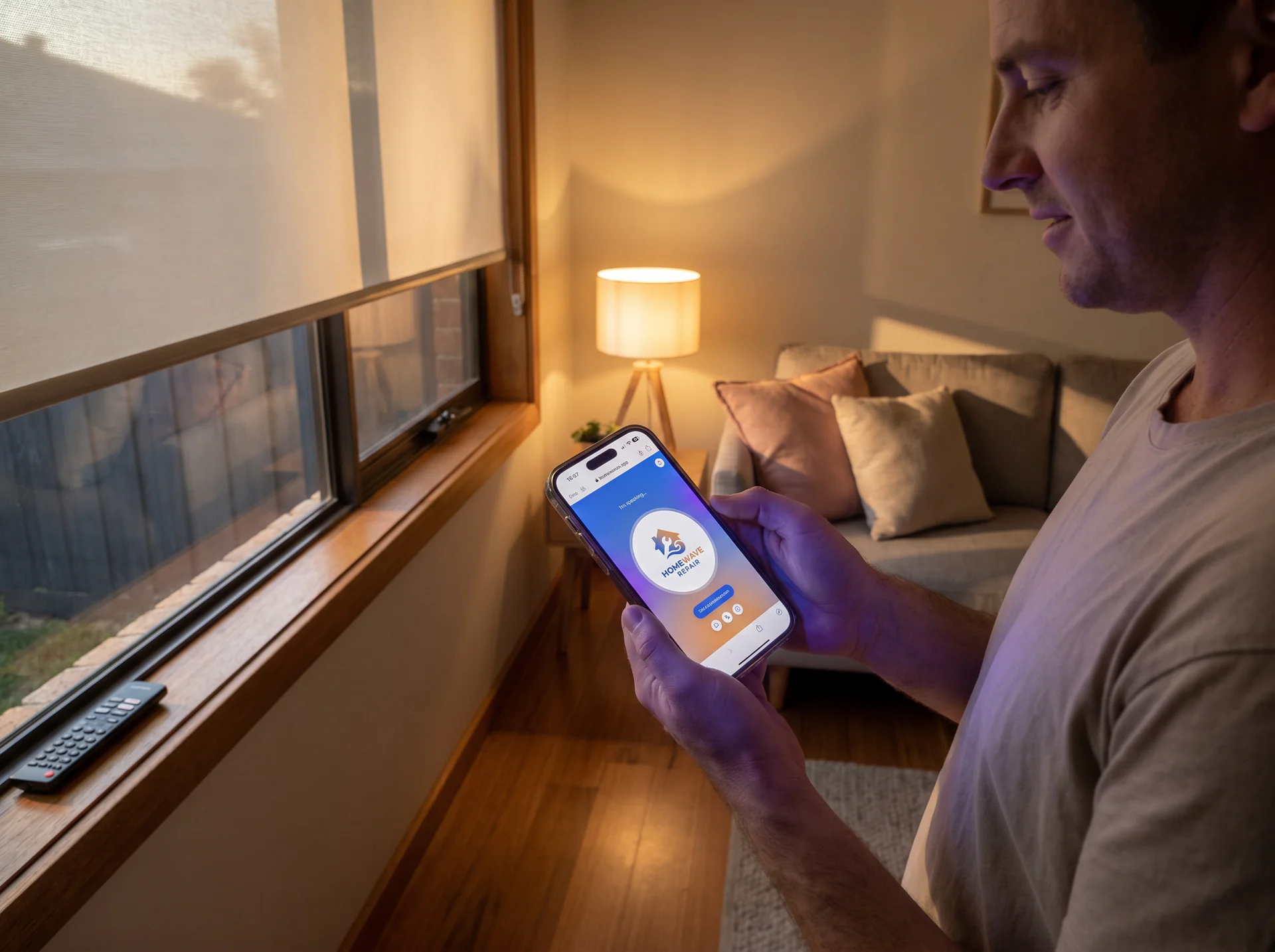
A meaningful share of customer support calls in this industry happen outside business hours. Someone gets home from work, walks into the living room, picks up the remote, and the blinds don’t move. They want help right now.
If you’re closed, they leave a voicemail. Or they don’t, and they Google a competitor who happens to have a chatbot up. Either way, your showroom loses ground.
A voice genie working the evening shift turns this into a contained, captured event. The customer gets a real conversation, gets the documented answer if there is one, gets a booked service callback if there isn’t, and goes to bed feeling looked after. Your team starts the day with a clean prioritised queue.
The same logic applies on weekends and over public holidays. A long weekend with the showroom shut used to mean a Tuesday morning panic. Now it’s just another shift logged by the genie.
The Numbers Most Window Shades Owners Don’t Want to Calculate
Let’s put a rough shape on it. A typical owner-operator showroom takes 20 to 40 inbound calls a week. Maybe 40% are sales-related and the rest are support, booking, or warranty.
If even three sales calls a week get missed because the team was tied up with support questions, that’s a meaningful number across a year. At the average install ticket for residential blinds and shades, those missed calls add up to tens of thousands of dollars in revenue that quietly walked.
The smaller, less obvious cost is the time-cost of interruption. Studies of attention in retail and service environments consistently find that recovering from an interruption takes meaningfully longer than the interruption itself. When your senior salesperson is yanked out of a quote to handle a four-minute remote-pairing question, the real cost is closer to fifteen minutes of lost focus, not four.
Voice triage protects both the missed calls and the lost focus. That’s the case for it on a single sheet of paper.
What to Look For in a Window Shades Voice Genie Setup
If you’re considering whether this fits your business, the checklist is simple.
Can it sound like your business? Brand voice, product names, accent, tone. A genie that sounds generic will lose customers. A genie that sounds like your showroom will keep them.
Does it know your product range? Not in a vague way. Cell sizes, fabric weights, motorisation options, warranty terms, current lead times. The deeper the knowledge base, the more support calls it resolves without escalating.
Can it triage cleanly? A genie that just takes a name and message is not a triage tool. You want structured outcomes by category, with the right calls going to the right people automatically.
Can it book? Even a soft booking, capturing preferred days and times for a consult or service call, is a meaningful upgrade over voicemail.
Does it cover the after-hours window? This is where most of the upside lives. A 9-to-5 solution misses the calls that hurt the most.
Is it easy to keep current? Pricing changes. New products launch. Old fabrics get discontinued. You should be able to update the knowledge base in minutes, not raise a ticket with a consultant.
Getting Started Without Tearing Anything Up
You don’t need to replace your phone system. You don’t need to re-train your team. A genie typically sits on an extra number that forwards to your existing line when escalation is needed.
Help Genie’s free plan is built specifically for this kind of pilot. You can set up a genie configured for window furnishings, point it at your product knowledge, and watch what happens to your call queue over a fortnight. Ten calls a month is enough to see the pattern. The right calls escalate. The wrong calls get handled. Your showroom gets quieter.
Most window shades owners we talk to are surprised by two things. First, how many of their daily calls turn out to be answerable from existing documentation. Second, how many sales enquiries they had been quietly missing.
If you want to see how it works for trade and home-service businesses generally, the trades page walks through the configuration patterns that apply. The ROI calculator gives a rough sense of what your current missed-call exposure looks like.
The Bottom Line
A window shades business lives and dies by two things: getting the right call to the right person, and keeping the showroom focused on selling. Voice triage handles the first and protects the second.
You don’t need more staff. You don’t need a different phone system. You need a layer between the phone and your team that knows your products, sorts the calls, answers what it can, and escalates what it can’t.
Your customers get faster, calmer service. Your team stops being interrupted. Your overnight queue turns into a structured morning briefing instead of a pile of regret.
Stop letting support questions eat your selling hours. Start free with Help Genie and let the genie triage your inbound calls while your showroom does what it’s best at.
Help Genie Tips
Get more from your voice genie

Build on-call schedules for after-hours routing
Different team members on different nights? Configure on-call schedules so your genie always routes calls to whoever is available, without you lifting a finger.

Sync appointments to Google Calendar or Outlook
When your genie books a showing, service call, or consultation, it can push the appointment directly to your calendar. No double-booking, no manual entry.

Keep answers fresh with real-time knowledge updates
Seasonal pricing? New menu items? Updated hours? Edit your knowledge base anytime and changes go live immediately. No retraining, no downtime.

Set different genie behavior for after-hours calls
Your genie can act differently at night. Triage emergencies, collect more info from callers, or simply take messages. You control what happens when the office is closed.
Ready to try it?
Set up a voice genie for your business in minutes.