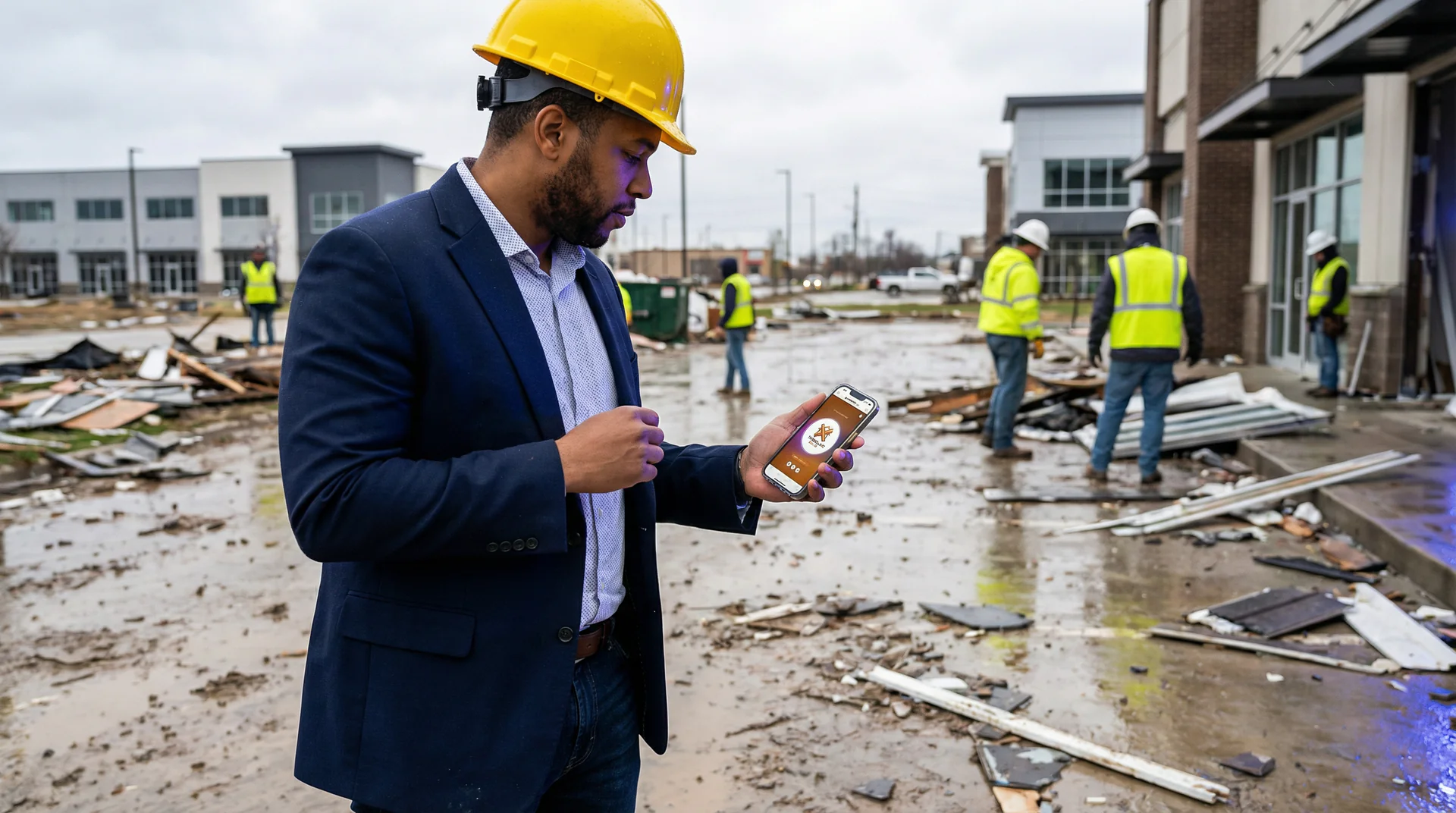
How AI Handles Storm Season Contractor Call Surges
A single storm can flood contractors with 200+ calls. Learn how AI triages storm damage inquiries, captures insurance details, and wins jobs.

When the Storm Hits, the Phone Explodes
A hailstorm rolls through a suburb on a Tuesday evening. By Wednesday morning, every roofing contractor within 30 miles has 50-200 missed calls. Homeowners are standing in their driveways staring at dented siding and damaged shingles, and they’re calling every contractor they can find.
This isn’t a hypothetical. It happens multiple times per year in storm-prone regions. A single weather event can generate more calls in 24 hours than a contractor normally handles in an entire month. And here’s the painful truth: most contractors miss 70-80% of those calls because they’re either on a roof themselves, already on the phone with another homeowner, or simply overwhelmed by the volume.
Every missed storm call is a $8,000-15,000 job walking to a competitor. In a major event that generates 200 calls, a contractor who answers 40 and misses 160 is leaving over a million dollars in potential work on the table.
Why Storm Calls Are Different
Normal business calls are predictable. You get 10-20 per day, they come during business hours, and your office staff handles them. Storm calls break every rule.
Volume is explosive. You go from 15 calls per day to 150+ overnight. No human team can scale that fast, and hiring temporary help in the middle of a storm response is impossible.
Timing is compressed. Homeowners call within 24-48 hours of a storm. After that, they’ve already found a contractor or given up. Your window to capture these leads is measured in hours, not weeks.
Every caller needs more than an appointment. Storm damage calls involve insurance questions, damage documentation guidance, emergency vs. non-emergency triage, and geographic coordination. A simple “we’ll call you back” doesn’t cut it when someone’s ceiling is leaking.
Emotions run high. Homeowners are stressed, sometimes scared, and often dealing with their insurance company for the first time. They need reassurance and clear next steps, not a rushed interaction or a voicemail beep.
The Insurance Claims Complexity
Storm damage calls aren’t just about scheduling an inspection. They involve a layer of insurance coordination that makes them fundamentally different from regular service calls.
Callers need help with:
- Whether to file a claim before or after getting an inspection
- What to document (photos of damage, timestamps, area of impact)
- What information their contractor needs from their insurance policy
- How the inspection-to-repair timeline works when insurance is involved
- Whether their damage qualifies as an emergency repair vs. a standard claim
A typical front-desk person can’t answer these questions effectively, especially not while juggling 100+ calls per day. But a voice genie trained on roofing and contractor workflows handles this naturally because the conversation patterns are consistent and well-documented.
How AI Triage Works During a Storm Event
When a storm hits and calls surge, a voice genie runs a triage process that separates emergencies from routine assessments and captures the details your team needs for every single call.
The Storm Responder handles the initial triage. It asks targeted questions: “Is water actively coming into your home right now?” separates the true emergencies from the damage assessments. Active leaks and structural compromise get flagged for same-day dispatch. Cosmetic damage like dented gutters and missing shingles gets scheduled for the next available inspection slot.
The Claims Guide walks callers through the insurance process. It explains what to photograph, how to document the damage timeline, and what information to have ready when the contractor arrives. This guidance saves your crew 15-20 minutes per inspection because homeowners arrive prepared.
The Inspection Scheduler books appointments based on geographic zones. After a widespread storm, you don’t want your crews zigzagging across a county. Smart scheduling groups inspections by neighborhood, maximizing the number of roofs your team can assess per day.
Geographic Prioritization
Major storms don’t hit everywhere equally. Hail might be severe in one zip code and barely noticeable two miles away. Wind damage follows corridors. Flooding affects low-lying areas disproportionately.
AI call handling can prioritize callers from the hardest-hit areas, ensuring your crews start where the damage and the opportunity are greatest. Callers from less-affected areas get scheduled for later in the week, and they’re told upfront when to expect their inspection.
This geographic intelligence helps you deploy crews efficiently during the critical first 48 hours when capturing market share matters most.
The Revenue Math After a Storm
Let’s run the numbers on a realistic scenario. A significant hailstorm hits a mid-size metro area. Your roofing company receives 200 calls over three days.
Without AI: Your two-person office staff handles 40-50 calls. The other 150+ go to voicemail. Of those, maybe 20 leave messages. You return calls the next day, but many homeowners have already booked with faster-responding competitors. You end up with 30 inspections scheduled and close 20 jobs at an average of $10,000 each. Total storm revenue: $200,000.
With AI: Every one of those 200 calls gets answered. The voice genie captures damage details, insurance info, and books inspections for all qualified homeowners. Your crews are deployed by geographic zone, maximizing inspections per day. You end up with 120 inspections scheduled and close 75 jobs. Total storm revenue: $750,000.
That’s a $550,000 difference from a single weather event.
Damage Documentation Guidance
One often overlooked benefit: AI voice genies can walk homeowners through basic damage documentation before the contractor arrives. The conversation goes something like this:
“While you’re waiting for your inspection, it would help our team if you can take a few photos. From the ground, try to capture any visible damage to your roof, gutters, and siding. If you see broken or missing shingles, photograph those areas. Also take a wide shot showing your full roofline. If there’s interior damage like water stains or active dripping, photograph those too.”
This isn’t complex. It’s a checklist delivered conversationally. But it means your inspector arrives to a homeowner who has their phone full of timestamped photos, which strengthens the insurance claim and speeds up the entire process.
The Ripple Effect of Storm Response
Storm response isn’t just about the immediate revenue. It’s about long-term market positioning.
The contractor who answers every call, provides clear guidance, and shows up quickly during a crisis becomes the neighborhood’s go-to roofer. Those 75 jobs don’t just generate $750,000 in storm work. They generate referrals, repeat business, and reviews that say “they answered my call the morning after the storm and had someone out that afternoon.”
In roofing, reputation is everything. One strong storm response can establish your company in an entire subdivision for years. The homeowner you help today recommends you to five neighbors next year when they need routine maintenance.
- 150+ calls going to voicemail
- No insurance info collected upfront
- Crews dispatched without geographic logic
- Competitors capturing your overflow
- Every call answered and triaged
- Insurance details captured before inspection
- Geographic scheduling maximizes crew efficiency
- Market share captured during the critical window
Preparing Before Storm Season
The worst time to set up storm response systems is after the storm hits. The best time is now.
Map your storm types. What weather events hit your area? Hail, wind, hurricanes, tornadoes, ice storms? Each generates different damage patterns and different caller needs. Your voice genie should be trained on the specific scenarios your region faces.
Define your triage rules. What counts as an emergency dispatch in your business? Active leaks and structural compromise are obvious, but define the gray areas. Does a tree on the roof get same-day response? What about a skylight that cracked?
Set up geographic zones. Divide your service area into zones and establish crew routing priorities. When the calls start, you want inspections grouped efficiently from day one.
Test before you need it. Run a simulation. Have a few people call in with storm damage scenarios and make sure the voice genie handles them correctly. Adjust the triage rules and conversation flow before the real event.
Contractors across home building trades and general trades who prepare for storm season with AI call handling don’t just survive the surge. They use it as the growth catalyst that defines their year.
Set up storm-ready call handling with voice genies built for roofing contractors and home service businesses, or see how storm triage works.
Help Genie Tips
Get more from your voice genie

Set different genie behavior for after-hours calls
Your genie can act differently at night. Triage emergencies, collect more info from callers, or simply take messages. You control what happens when the office is closed.

Route urgent calls to a real person instantly
Set up smart transfer rules so your genie hands off to the right team member when it detects urgency, a VIP caller, or a question it cannot answer. Conference or warm handoff.

Capture exactly the info you need from every caller
Define custom fields your genie should collect: budget, timeline, property type, vehicle make, service needed. Every call ends with structured data, not a scribbled note.

See full transcripts and sentiment for every conversation
Review what callers asked, how your genie responded, and whether the conversation was positive. Spot trends, refine your genie, and improve over time.
Ready to try it?
Set up a voice genie for your business in minutes.
Keep exploring
Further reading and useful tools
Voice AI for Home Builders: The Complete Guide
How home builders, remodelers, roofers, and flooring pros use voice AI genies to capture every new-build, reno, and storm-season lead 24/7
Industry InsightsWhy Most Trades Businesses Qualify Too Late Without a Quoting Genie
Voice AI quoting is changing how owner-operators filter leads. Here's why qualification before the site visit matters more than conversion.
Industry InsightsThe Defects Period Is Breaking Your Best Person
Every home builder has one person drowning in warranty queries. Here's why the defects period is a structural problem, and what voice AI can do about it.
GuideHow to Build a Support Function Checklist for Your Small Business Using Voice AI
A step-by-step support function checklist for small business owners who want their genie handling frontline queries 24/7 without growing headcount.
BlogHome Builders: Cut No-Shows 30-40% With 24/7 Booking
Stop losing tours to slow follow-up. See how home builders book more tours, qualify buyers automatically, and cut no-shows by 30 to 40 percent.
BlogAI Estimate Intake for Flooring Contractors
Flooring contractors waste 40% of estimate visits on unqualified leads. AI pre-qualifies square footage, materials, and budget before you send a crew.
Help Genie
The Help Genie Team
The Help Genie team builds voice AI genies that resolve everyday support on their own — across phone, chat, web, and email — in your voice, 24/7. We write about what we learn shipping it to real businesses.
Building voice AI for 11+ industries, from trades to hospitality.
- voice AI
- customer support
- lead capture
- multi-channel genies