
AI Call Handling for Businesses in Multilingual Markets
Businesses in Miami, LA, Houston, and NYC lose revenue when they can only handle calls in English. Learn how voice AI detects caller language and switches seamlessly to serve multilingual markets.

A real estate agent in Miami gets a call from a prospective buyer. The caller starts in English, asks about a listing in Doral, then switches to Spanish mid-sentence when describing what their family needs. The agent’s receptionist speaks only English. She catches the property address but misses the details about the buyer’s mother-in-law suite requirement, the school district preference, and the urgency of their timeline. The lead gets logged as “interested in Doral listing” with no qualification notes.
A competing agent’s office handles the same type of call in fluent Spanish. That agent gets the full picture. That agent gets the deal.
In markets like Miami, Los Angeles, Houston, New York, San Antonio, and Chicago, the ability to handle calls in more than one language isn’t a luxury. It’s a revenue requirement. Businesses that can only operate in English are leaving money on the table in every interaction where language becomes a barrier.
The Revenue Impact of Language Barriers
Language barriers in business phone interactions don’t just cause inconvenience. They cause lost revenue. The caller who can’t fully express their needs in English doesn’t just get a worse experience. They often hang up and find a provider who speaks their language.
This pattern plays out across every industry in multilingual markets:
Real estate: A Spanish-speaking family looking to buy a home wants to discuss financing options, neighborhood safety, school quality, and commute times. These are nuanced conversations. If the first point of contact can’t handle them in the caller’s preferred language, the family finds an agent who can.
Medical offices: A patient calling about symptoms, medication questions, or appointment scheduling needs precision. Miscommunication in healthcare has consequences beyond lost business. Practices that serve multilingual communities need phone interactions that match.
Home services: A homeowner calling about a plumbing emergency needs to describe the problem accurately. “Water is coming from under the sink” versus “water is flooding the basement” requires different responses. If the caller can’t communicate the severity in English, the dispatcher might send the wrong level of urgency.
Legal services: Immigration attorneys, personal injury firms, and family law practices in multilingual markets depend on phone intake in the caller’s language. The details matter too much for approximate translation.
How Voice AI Handles Multilingual Calls
Voice genies can detect the caller’s language preference and switch among configured languages. There is no need to wait for a shared human operator with that language skill, although detection accuracy, supported languages, and latency depend on the model and configuration.
- Non-English callers asked to hold while bilingual staff is located
- "Press 2 for Spanish" routes to a separate queue with longer wait times
- After-hours calls in other languages go completely unhandled
- Intake quality drops when staff translates approximately rather than fluently
- Language detected automatically within seconds, no menu prompts
- Full conversation in the caller's preferred language, same quality as English
- 24/7 coverage in all supported languages without additional staffing
- Accurate intake and qualification regardless of language
The technical capability behind this is significant, but the caller experience is simple. They call, they speak, and the voice genie responds in their language. The entire interaction feels natural because it mirrors how a bilingual human receptionist would handle the call.
Real Estate: Where Bilingual Capability Drives Deals
Real estate is one of the most language-sensitive industries because of the dollar amounts involved and the emotional weight of the transaction. Buying a home is the largest financial decision most families make. Doing it in a second language adds stress that can slow the process or push the buyer to a competitor.
The Listing Concierge handles property inquiries in the caller’s language, providing listing details, neighborhood information, and scheduling showings without any language friction. A Spanish-speaking caller asking about a property in Hialeah gets the same thorough response as an English-speaking caller asking about a condo in Brickell.
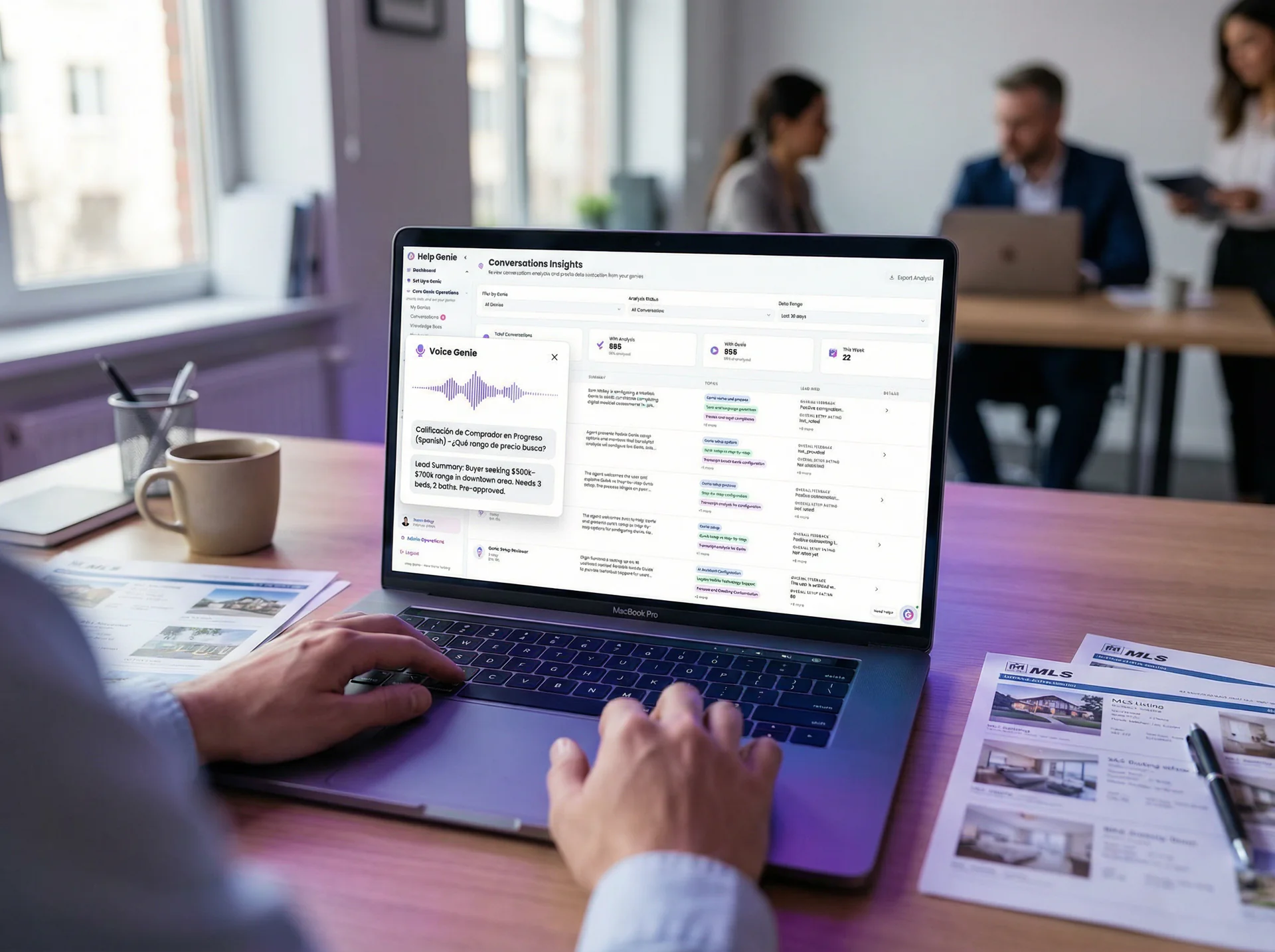
The Buyer Qualifier takes this further by running the full qualification conversation in the caller’s preferred language. Pre-approval status, desired neighborhoods, must-have features, timeline, and family needs all get captured accurately. The agent receives a complete buyer profile, not a partial one filtered through approximate translation.
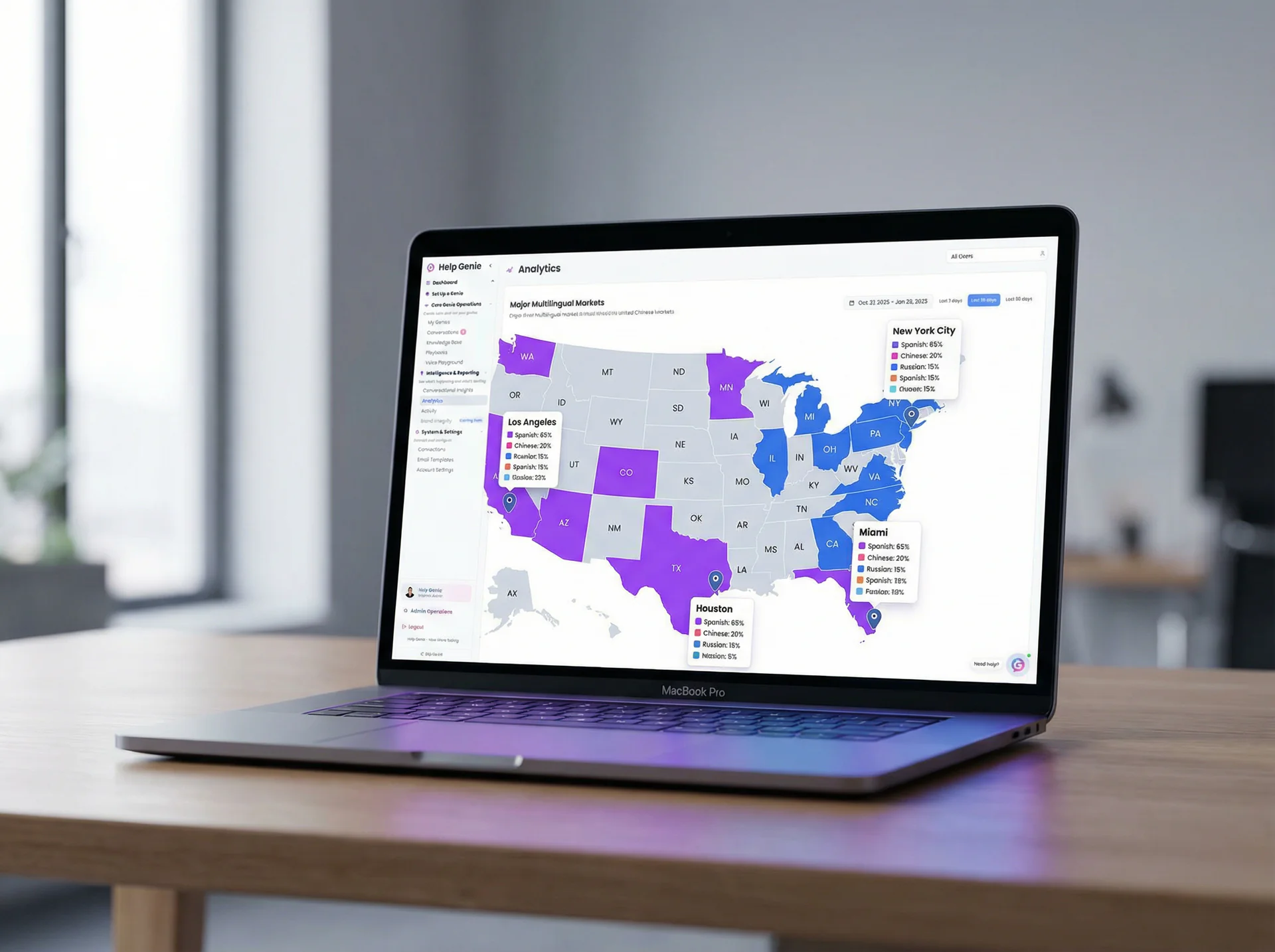
The Markets Where This Matters Most
While bilingual capability helps businesses everywhere, certain U.S. markets make it almost essential:
Miami-Dade County: Over 70% of the population speaks a language other than English at home. Spanish is dominant, but Haitian Creole and Portuguese are also significant. A real estate office, medical practice, or service business operating only in English is excluding the majority of the local market.
Los Angeles County: More than 55% of residents speak a language other than English at home. Spanish, Mandarin, Korean, Tagalog, and Armenian are all commonly spoken. Businesses in specific neighborhoods face even higher percentages.
Houston: The fourth-largest city in the U.S. has a Hispanic population exceeding 45%. Spanish-language call capability is table stakes for home services, healthcare, legal, and real estate businesses.
New York City: One of the most linguistically diverse places on Earth. Beyond Spanish (which is dominant), businesses encounter Mandarin, Cantonese, Russian, Korean, Bengali, and dozens of other languages depending on the borough and neighborhood.
San Antonio: Over 60% Hispanic population. Businesses that can’t handle Spanish-language calls are functionally excluding more than half their potential market.
Beyond Spanish: The Multilingual Opportunity
Spanish-English bilingual capability addresses the largest opportunity in the U.S. market, but voice AI doesn’t stop there. The same detection-and-switch technology works across dozens of languages.
For commercial real estate firms working with international investors, the ability to handle calls in Mandarin, Portuguese, Arabic, or French opens deal flow that previously required hiring native speakers for each language. An investor calling from Sao Paulo about a commercial property in Orlando gets the same quality conversation as a local caller.
The cost math is compelling. Hiring a bilingual receptionist for one additional language costs $35,000 to $50,000 per year. Hiring reception staff to cover three or four languages means three or four salaries. Voice AI covers all supported languages simultaneously for a fraction of that cost.
Implementation: Easier Than Hiring Bilingual Staff
Setting up multilingual voice AI is dramatically simpler than the traditional approach of hiring bilingual employees. The process involves three steps:
-
Identify your market languages. Which languages do your callers speak? If you’re unsure, check your missed call logs and listen for voicemails in other languages. Ask your front desk staff how often they encounter non-English callers.
-
Configure language-specific responses. Your voice genie needs to know how to discuss your services in each target language. This isn’t just translation. It’s cultural calibration. The way you discuss home buying in Spanish-language markets differs from a direct translation of your English script.
-
Set routing rules. When a Spanish-speaking caller needs to be transferred to a live agent, do you have a bilingual team member? If so, route to them. If not, the voice genie handles the full interaction and delivers a summary the English-speaking agent can act on.
The residential agents overview shows how real estate offices in multilingual markets configure their voice genies for maximum coverage. The broader real estate solutions demonstrate the pattern across residential, commercial, and property management contexts.
The Competitive Advantage Is Temporary
Right now, offering multilingual AI call handling in markets like Miami, Houston, and LA is a competitive advantage. Businesses that deploy it capture callers that competitors can’t serve. But this advantage has a shelf life. As more businesses adopt voice AI with language capabilities, the advantage shifts from “we can do this” to “we were already doing this while competitors were catching up.”
The businesses that move first build brand recognition in multilingual communities. The real estate agent known in the local Spanish-speaking community as the one who actually answers the phone in Spanish builds a referral network that compounds over years. The plumbing company that handles emergency calls in Spanish on a Saturday night earns the kind of loyalty that no marketing budget can buy.
Multilingual markets aren’t niche. In many of the largest, fastest-growing metros in the country, they’re the majority. Voice AI makes serving them operationally simple and financially obvious.
Help Genie Tips
Get more from your voice genie

Sync appointments to Google Calendar or Outlook
When your genie books a showing, service call, or consultation, it can push the appointment directly to your calendar. No double-booking, no manual entry.

Generate QR codes that connect callers to your genie
Print a branded QR code on business cards, yard signs, or flyers. Customers scan and start talking to your genie instantly from their phone.

Route urgent calls to a real person instantly
Set up smart transfer rules so your genie hands off to the right team member when it detects urgency, a VIP caller, or a question it cannot answer. Conference or warm handoff.

Cover nights, weekends, and holidays automatically
Your genie picks up every call outside business hours, qualifies leads, handles emergencies, and books appointments for the next morning. No answering service needed.
Ready to try it?
Set up a voice genie for your business in minutes.
Keep exploring
Further reading and useful tools
AI vs Human Receptionist for Real Estate Agents
AI or a human receptionist for real estate? Compare speed-to-lead, after-hours coverage, and booking showings, then see which wins more listings.
Use CaseAI Showing Scheduling for Real Estate Agents
How The Showing Scheduler voice genie books property viewings around the clock, coordinates availability, and keeps agents focused on closing deals.
BlogAI Open House Follow-Up for Real Estate Agents
Real estate agents collect dozens of open house contacts but follow up with a fraction. Learn how AI qualifies and nurtures every lead automatically.
BlogAI Lead Qualification for Real Estate Agents
Real estate agents miss buyer calls during showings. Learn how AI lead qualification captures budget, timeline, and preferences before you call back.
Case StudyAsset Pro Property Maintenance: Voice AI Triage for Tenant Calls
How a Melbourne property management firm used a voice genie to sort tenant maintenance emergencies from routine requests — illustrative scenario with example metrics.
ComparisonBest AI Receptionist for Property Managers in 2026
The best AI receptionist for property managers in 2026. Honest roundup for tenant maintenance triage, tenant inquiries, leasing calls, and after-hours emergencies.
Help Genie
The Help Genie Team
The Help Genie team builds voice AI genies that resolve everyday support on their own — across phone, chat, web, and email — in your voice, 24/7. We write about what we learn shipping it to real businesses.
Building voice AI for 11+ industries, from trades to hospitality.
- voice AI
- customer support
- lead capture
- multi-channel genies