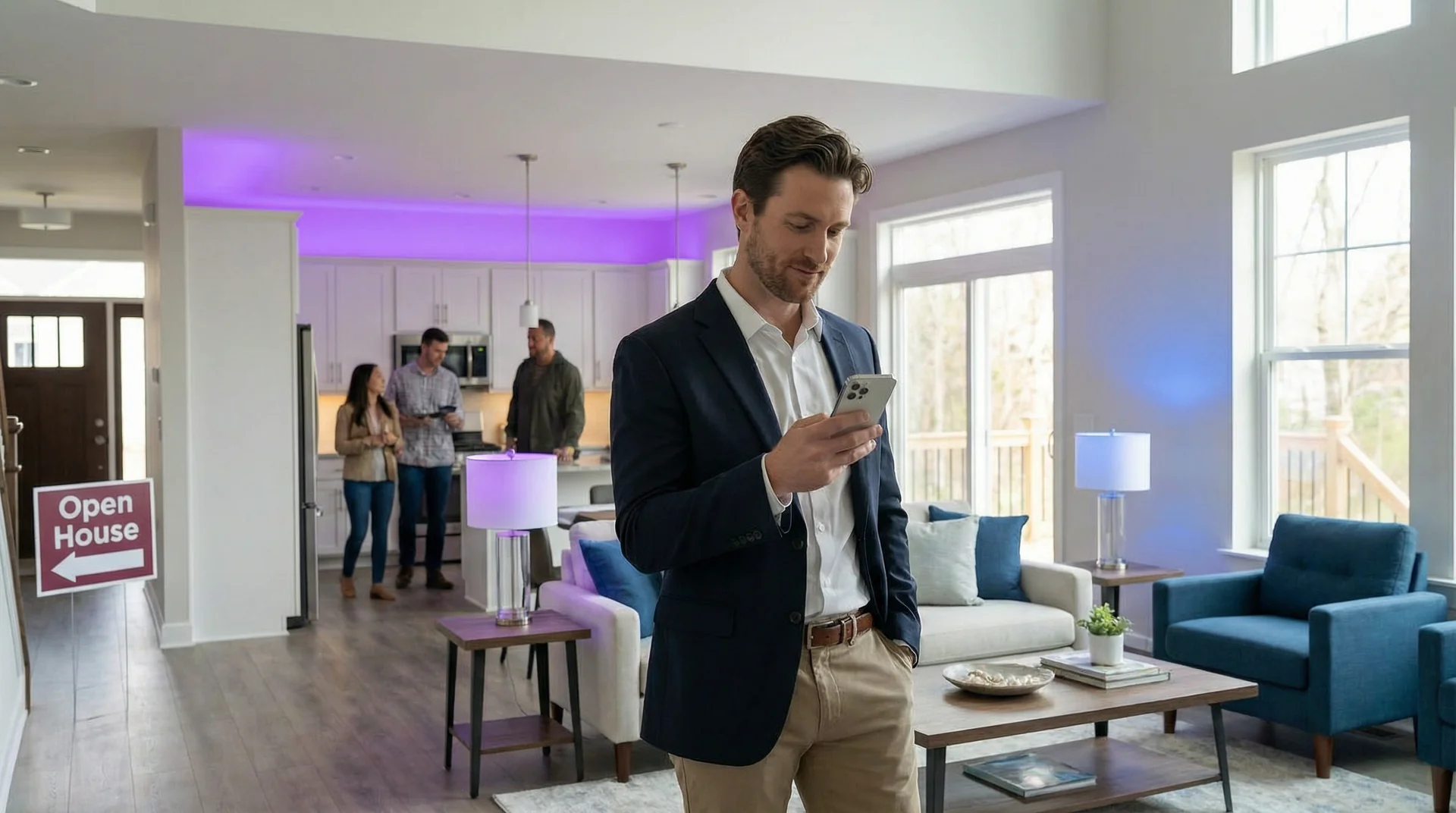
AI Open House Follow-Up for Real Estate Agents
Real estate agents collect dozens of open house contacts but follow up with a fraction. Learn how AI qualifies and nurtures every lead automatically.

You held an open house on Saturday. Twenty-three people signed in. By Monday morning, you’ve personally followed up with six of them. The other seventeen? They’re sitting in a spreadsheet, aging by the hour, while you prep for two showings and a listing appointment.
That stat isn’t specific to real estate, but it applies directly. The agent who follows up first wins the client. Not the agent with the best listing presentation. Not the one with the most experience. The one who picks up the phone while the buyer is still thinking about the kitchen they just walked through.
The problem isn’t laziness. It’s math. You can’t personally call 23 people on a Sunday afternoon while driving to your next commitment. Something has to give, and it’s usually the bottom half of the sign-in sheet.
The Follow-Up Gap Is Costing You Commissions
The residential agents space is built on relationships and responsiveness. Buyers who walked through your open house are giving you a signal. They showed up in person, looked at the property, and gave you their contact information. That’s about as warm as a lead gets without them literally saying “I want to make an offer.”
Here’s what the follow-up gap actually costs:
- Lost buyer leads: A pre-approved buyer who attended your open house and doesn’t hear from you within a day will likely work with the next agent who reaches out
- Lost listing leads: Homeowners who attend open houses in their neighborhood are often considering selling. They’re scouting the competition. If you don’t follow up, you miss the listing opportunity entirely
- Wasted marketing spend: The staging, the signs, the social media promotion, the hours on a weekend. All of that investment generates leads that go cold because follow-up is too slow
The agents who consistently convert open house traffic into clients aren’t doing anything magical. They’re just faster. AI makes it possible to be fast with every single lead, not just the ones you get to first.
How AI Follow-Up Actually Works After an Open House
Let’s walk through what this looks like in practice. You hold an open house on Saturday from 1 to 4 PM. Twenty people sign in. Here’s what happens next.
Within Hours: Initial Contact and Qualification
The Buyer Qualifier reaches out to every attendee. The conversation is natural, not robotic. It thanks them for visiting, asks about their impression of the property, and then gathers the information that matters:
- Interest level: Are they actively looking, or just browsing the neighborhood?
- Timeline: When are they hoping to move?
- Pre-approval status: Have they spoken with a lender?
- Current situation: Are they renting, selling a current home, or relocating?
- Property preferences: What did they like or not like about the property they just toured?
This isn’t a survey. It’s a conversation that any good agent would have if they had the time. The AI adapts based on responses. A first-time buyer gets different follow-up questions than a downsizer looking to sell their family home.
Lead Scoring: Focus Your Time Where It Matters
Not all open house visitors are equal. The couple who just got pre-approved for $450,000 and needs to move by July is a fundamentally different lead than the neighbor who walked over out of curiosity.
After the initial follow-up conversation, the AI categorizes leads:
- Hot: Pre-approved, active timeline, expressed interest in the property or similar ones
- Warm: Interested but early in the process, needs lender referral or more information
- Nurture: Not ready now but could be in 6-12 months
- Listing potential: Homeowner in the area considering selling
You get this breakdown on your phone before Monday morning. Instead of working through the entire sign-in sheet in order, you’re calling the three hottest leads first. That’s where AI makes you more effective, not by replacing your personal touch, but by telling you where to apply it.
Showing Scheduling Without the Phone Tag
Once a hot lead is identified, the next step is usually a private showing. This is where phone tag kills momentum. The buyer is interested on Saturday evening. You call Monday. They’re at work. You leave a message. They call back Tuesday during your listing presentation. By Wednesday, three days have passed and the energy is gone.
The Showing Scheduler handles this directly. When a buyer expresses interest in seeing a property again or viewing similar homes, the AI books the appointment based on your availability and the property’s showing schedule. No back-and-forth. No missed calls. The buyer gets confirmed for Thursday at 5 PM, and you get the notification with full context on who they are and what they’re looking for.
Try the Buyer Qualifier, your lead qualification specialist to see how it qualifies an open house lead.

The Listing Side: Finding Sellers at Open Houses
Here’s something most agents underutilize about open houses. A significant percentage of attendees are homeowners from the neighborhood. They’re not looking to buy that specific property. They’re checking comparable prices because they’re thinking about selling their own home.
These are listing leads hiding in plain sight. An agent who personally follows up with all 23 visitors might catch one or two of these. An AI that follows up with everyone and asks the right questions catches all of them.
The follow-up conversation naturally uncovers this: “I noticed you mentioned you live in the neighborhood. Have you thought about what your home might be worth in this market?” That question, asked within hours of the open house while the comparisons are fresh, opens doors that a week-late follow-up never would.
For agents building their listing pipeline, this is one of the highest-value applications of AI follow-up. A listing commission on a $400,000 home is $10,000 to $12,000. Finding one additional listing lead per month through better open house follow-up pays for the technology many times over.
Specific Buyer Scenarios That AI Handles Differently
The value of AI follow-up becomes clearest when you look at specific buyer types that walk through an open house.
First-time buyers often have the most questions and the least confidence. They attended the open house but didn’t ask much because they felt overwhelmed. AI follow-up gives them a comfortable space to ask basic questions about the buying process, pre-approval requirements, and what they can realistically afford. These buyers need guidance more than a sales pitch, and the AI provides it.
Relocating buyers are on a tight timeline. They flew in for the weekend, visited six open houses, and flew home Sunday night. By Monday, they’re comparing properties from memory. The agent who follows up with organized details about the property they visited, plus comparable listings they might like, wins the engagement. Speed matters even more here because these buyers often work with whichever agent responds first in an unfamiliar market.
Downsizers represent both a buy-side and sell-side opportunity. They’re looking at smaller properties, which means they have a larger home to list. AI follow-up that identifies this dual opportunity captures both the buyer commission and the listing commission from a single open house contact.
Investors attend open houses to evaluate rental potential and neighborhood trends. They’re rarely identified by casual follow-up because they don’t signal the same urgency as a primary residence buyer. AI that asks about purchase intent and investment goals surfaces these leads that most agents overlook.
The Commission Math
Let’s be conservative. You hold two open houses per month. Average 15 contacts each. That’s 30 leads per month that currently get inconsistent follow-up.
With AI handling the initial outreach, qualification, and showing scheduling, say you convert one additional buyer and identify one additional listing lead per quarter that you would have otherwise missed.
At an average commission of $10,000 per transaction, that’s an additional $20,000 per quarter from leads you were already generating but not fully working. The sign-in sheets were full. The follow-up was the bottleneck.
For more on how AI handles real estate lead qualification beyond open houses, see AI lead qualification for residential real estate.
- Follow up with 6 of 23 contacts personally
- Generic email blast to the rest on Monday
- No lead scoring or prioritization
- Showing scheduling takes 3-5 rounds of phone tag
- Every attendee gets a personal follow-up call within hours
- Leads scored by readiness: hot, warm, nurture, listing potential
- Agent's Monday starts with a prioritized list and full context
- Showings booked automatically based on buyer interest and agent availability
Open house follow-up isn't about working harder. It's about working every lead, not just the ones you get to first. AI handles the initial outreach, qualification, and scheduling so your personal attention goes to the buyers and sellers most likely to transact.
Every open house generates more opportunity than most agents can work manually. Help Genie’s real estate genies handle the follow-up, qualification, and scheduling that turns a sign-in sheet into closed transactions.
Help Genie Tips
Get more from your voice genie

Sync appointments to Google Calendar or Outlook
When your genie books a showing, service call, or consultation, it can push the appointment directly to your calendar. No double-booking, no manual entry.

Generate QR codes that connect callers to your genie
Print a branded QR code on business cards, yard signs, or flyers. Customers scan and start talking to your genie instantly from their phone.

Route urgent calls to a real person instantly
Set up smart transfer rules so your genie hands off to the right team member when it detects urgency, a VIP caller, or a question it cannot answer. Conference or warm handoff.

Cover nights, weekends, and holidays automatically
Your genie picks up every call outside business hours, qualifies leads, handles emergencies, and books appointments for the next morning. No answering service needed.
Ready to try it?
Set up a voice genie for your business in minutes.
Keep exploring
Further reading and useful tools
AI vs Human Receptionist for Real Estate Agents
AI or a human receptionist for real estate? Compare speed-to-lead, after-hours coverage, and booking showings, then see which wins more listings.
Use CaseAI Showing Scheduling for Real Estate Agents
How The Showing Scheduler voice genie books property viewings around the clock, coordinates availability, and keeps agents focused on closing deals.
BlogAI Call Handling for Businesses in Multilingual Markets
Businesses in Miami, LA, Houston, and NYC lose revenue when they can only handle calls in English. Learn how voice AI detects caller language and switches seamlessly to serve multilingual markets.
BlogAI Lead Qualification for Real Estate Agents
Real estate agents miss buyer calls during showings. Learn how AI lead qualification captures budget, timeline, and preferences before you call back.
Case StudyAsset Pro Property Maintenance: Voice AI Triage for Tenant Calls
How a Melbourne property management firm used a voice genie to sort tenant maintenance emergencies from routine requests — illustrative scenario with example metrics.
ComparisonBest AI Receptionist for Property Managers in 2026
The best AI receptionist for property managers in 2026. Honest roundup for tenant maintenance triage, tenant inquiries, leasing calls, and after-hours emergencies.
Help Genie
The Help Genie Team
The Help Genie team builds voice AI genies that resolve everyday support on their own — across phone, chat, web, and email — in your voice, 24/7. We write about what we learn shipping it to real businesses.
Building voice AI for 11+ industries, from trades to hospitality.
- voice AI
- customer support
- lead capture
- multi-channel genies