 Industry Insights cross industry
 Why the First 90 Seconds Decide Speed to Lead in 2026
 Help Genie
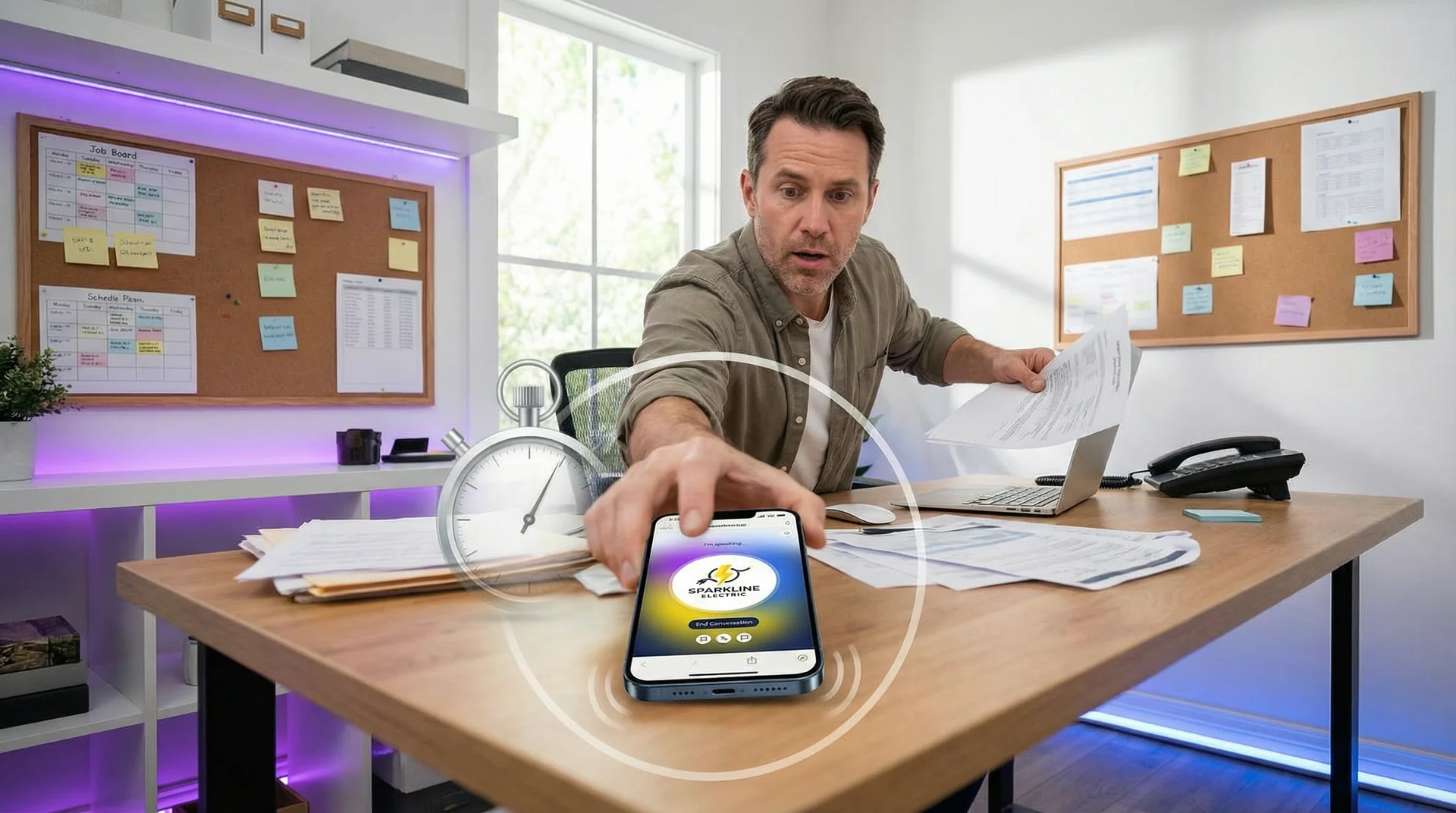
 A homeowner’s water heater fails at 7 AM on a Tuesday. They search “emergency plumber near me,” click the first three results, and call all three. One answers on the second ring. The other two go to voicemail. The homeowner books with the company that answered. The entire decision took less than 90 seconds. The other two plumbers never had a chance.
The State of Lead Response: Most Businesses Are Losing
Before examining why speed matters so much, it helps to understand how badly most businesses perform on response time. The data is worse than most owners realize.
The distribution is just as telling. Only 23% of companies respond to leads within 5 minutes. A full 42% take longer than 24 hours to respond. The majority of businesses are not even in the game by the time they pick up the phone.
| Response Time | % of Companies | Conversion Impact |
|---|---|---|
| Under 1 minute | ~5% | 391% higher conversion (Verse.ai / Kixie) |
| Under 5 minutes | 23% | 32% close rate (Optif.ai) |
| 5-30 minutes | ~15% | Rapidly declining qualification rates |
| 30 min - 24 hours | ~20% | 21x less likely to qualify (lead research) |
| Over 24 hours | 42% | 12% close rate (Optif.ai) |

The 5-Minute Threshold: Where Data Gets Specific
The most cited speed-to-lead research focuses on the 5-minute mark, and for good reason. The data at that threshold is unambiguous.
Leads contacted in under 5 minutes achieve a 32% close rate, which is 2.6 times higher than leads contacted after 24 or more hours, where the close rate drops to 12%. That data comes from Optif.ai’s analysis of lead response outcomes.
The qualification gap is even more dramatic than the close rate gap. Leads contacted within 5 minutes are 21 times more likely to qualify than those contacted after 30 minutes. Not twice as likely. Twenty-one times. The lead does not change in those 25 minutes. What changes is their patience, their attention, and whether a competitor got to them first.
The 90-Second Window for Home Services
Why 90 seconds? Because home service calls are almost always urgent. Nobody calls a plumber out of idle curiosity. Nobody phones an HVAC company to chat about thermodynamics. When a homeowner picks up the phone, they have a problem and they want it solved now. If the first company does not answer, they immediately call the next one.
HouseCallPro data confirms the pattern: 78% of customers choose the first company that responds. For a plumbing business or an auto repair shop, being second to respond is functionally the same as not responding at all. Nearly four out of five customers are already gone.
The Voicemail Death Spiral
Many business owners assume that if they miss a call, the customer will leave a voicemail and they can call back. The data destroys that assumption.
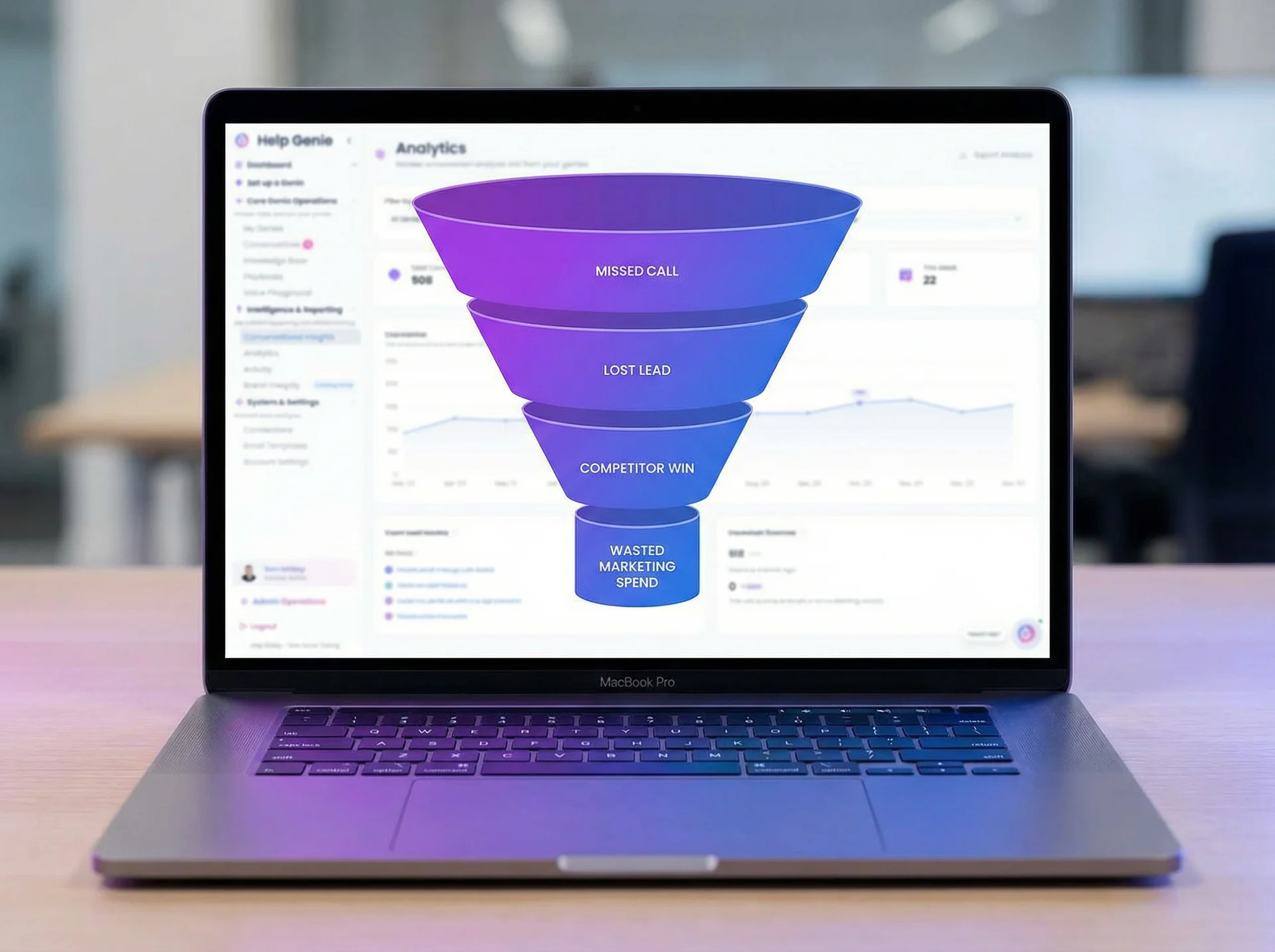
This creates a compounding loss that most businesses never see in their data. The call log shows one missed call. The actual loss is one missed call, plus one lead gone to a competitor, plus the lifetime value of that customer relationship, plus the marketing spend that generated the call in the first place. There is no voicemail waiting to be returned. The customer is already booked with someone else.
The Cost of Being Second
To make the speed-to-lead data concrete, consider what it means for specific service businesses.
Scenario: A residential real estate agent
A buyer finds a listing online and calls the listing agent’s number. The agent is showing another property and cannot answer. The buyer calls a second agent from a competing brokerage. That agent answers, schedules a showing, and begins a relationship that leads to a $400,000 purchase. The listing agent calls back two hours later. The buyer says they already found someone to help them.
One missed call. One lost commission of $10,000 to $12,000. Real estate agents who use voice genies to capture these calls never face this scenario.
Scenario: An HVAC contractor
A business owner’s commercial AC unit fails on a Friday afternoon. They call three HVAC companies. One answers via a voice genie, captures the details, confirms the address, and dispatches a technician. The other two are already on job sites. By the time they check voicemail at 5 PM, the job is booked.
One missed call. One lost $2,500 commercial repair job. The business that answered did not have more technicians or better equipment. They just picked up the phone.
Scenario: An event venue
A couple planning their wedding calls three venues on a Saturday morning. One answers immediately and walks them through availability, pricing, and scheduling a tour. The other two venues have staff that only work Monday through Friday. By Monday morning, the couple has already toured the first venue and placed a deposit.
One missed call. One lost $15,000 to $40,000 event booking.
How Voice Genies Solve the Speed Problem
The speed-to-lead data creates a clear operational requirement: every call must be answered within seconds, every time, regardless of whether staff are available. That requirement is impossible for humans to meet consistently. Staff get busy. Phones ring during other calls. Lunch breaks happen. Evenings and weekends happen.
Voice genies solve the problem by removing the variability. A Help Genie voice genie answers every call on the first or second ring. It does not put callers on hold. It does not send them to voicemail. It engages immediately, captures the caller’s need, qualifies the lead, and either books the appointment or routes the call to the right person.
The result is that every call falls into the “under 5 minutes” response category that produces a 32% close rate, rather than the “over 24 hours” category where close rates drop to 12%.
What the Data Demands
The speed-to-lead research leads to one conclusion: the businesses that answer fastest will win the most customers. That was true five years ago, and the window has only gotten tighter. In 2026, for home services, the window is 90 seconds.
Here is what the data demands from service businesses:
- Answer every call live. Voicemail is not a backup plan. It is a customer loss mechanism. 85% of callers will not use it.
- Respond in under 90 seconds. For trades, automotive, and other service businesses, anything slower than 90 seconds means the customer is already dialing a competitor.
- Cover every hour. Leads do not call on your schedule. They call on theirs. After-hours coverage is not optional.
- Qualify during the first call. The first contact is your best chance to convert. Capturing a name and number for a callback is not enough when 78% of customers book with whoever responds first.
Voice genies from Help Genie are built to meet all four requirements for service businesses across every industry. When a lead calls, the genie answers. Every time. In seconds. That is the speed-to-lead advantage the data says matters most.
Keep exploring
Further reading and useful tools
When Your Best Leads Call After Hours and Nobody Answers
Data showing how much revenue service businesses lose to unanswered after-hours calls. Includes per-industry missed call rates, conversion data, and cost analysis.
Industry InsightsAI vs Human Support: Who Actually Wins on Satisfaction?
AI-handled support now scores 97% CSAT, up from 78%. But 75% of customers still want a human for complex issues. See where each one wins.
GuideRoute Calls Across Locations in 7 Steps (No Missed Calls)
Set up AI call routing for multi-location businesses in 7 steps. Route by area code, time zone, and department from one dashboard, for 2 to 10 sites.
GuideHow to Connect Help Genie to Your CRM with Webhooks
Set up webhooks to send Help Genie conversation data, leads, and call events directly to Salesforce, HubSpot, or any CRM through Zapier, Make, or custom integrations.
ComparisonBest AgentZap Alternatives (2026)
Honest roundup of AgentZap alternatives for AI receptionists. Compare minute-based AI, flat-rate voice genies, and human answering services.
ComparisonBest Smith.ai Alternatives (2026)
Honest roundup of the top Smith.ai alternatives, from human answering services to flat-rate voice AI. Compare pricing models and find the right fit.
Help Genie
The Help Genie Team
The Help Genie team builds voice AI genies that resolve everyday support on their own — across phone, chat, web, and email — in your voice, 24/7. We write about what we learn shipping it to real businesses.
Building voice AI for 11+ industries, from trades to hospitality.
- voice AI
- customer support
- lead capture
- multi-channel genies