 Use Case appliances
 How Voice AI Handles Appliance Support Across Every Channel
One genie answers appliance support questions across phone, web chat, email, and QR. Same answer, every time, 24/7. Here's how it works.
 Help Genie
 The 7pm Phone Call
Maria bought a dishwasher eight months ago. Tonight she’s standing in her kitchen, water pooling at her feet, staring at a blinking E15 code on the panel. It’s 7pm on a Thursday.
She calls your support line. She waits. She talks to someone who reads from a script and tells her to check the filter. She does. The code comes back.
At 9pm she opens her laptop and finds your website chat. Different person. Same answer. Slower.
She sends an email overnight just to have a record. Someone replies at 10am Friday morning. Same fix, third time.
Three different humans on your end. Three separate conversations. One customer. One dishwasher. One E15 code.
That’s the appliances channel spread problem. And it costs you more than you think.
The Gap: Why Multi-Channel Support Breaks Down
Appliance businesses field questions from everywhere. Phone is still the dominant channel for older customers. Web chat is how younger buyers reach out. QR codes are showing up on product tags and installation cards. Email is the fallback when everything else feels too slow.
The problem isn’t the channels. The channels are fine. The problem is that every channel requires a different person, a different handoff, and a different conversation.
When a customer asks the same question through three different touchpoints, they’re not being difficult. They’re just trying to get their dishwasher working. But on your end, you’re burning staff time tripling up on the same answer. Worse, the answers aren’t always consistent. One agent says check the filter. Another says reset the power. A third says to schedule a service visit. The customer is now more confused than when they started.
For small appliance businesses especially, this is where the wheels fall off. You don’t have a 20-person support team. You have two people answering phones and another one handling email between other tasks. When E15 season hits (or whatever your equivalent is), the queue backs up fast.
And after hours? It’s just an unanswered phone and a chat widget that says “We’ll get back to you soon.”
How the Genie Handles It
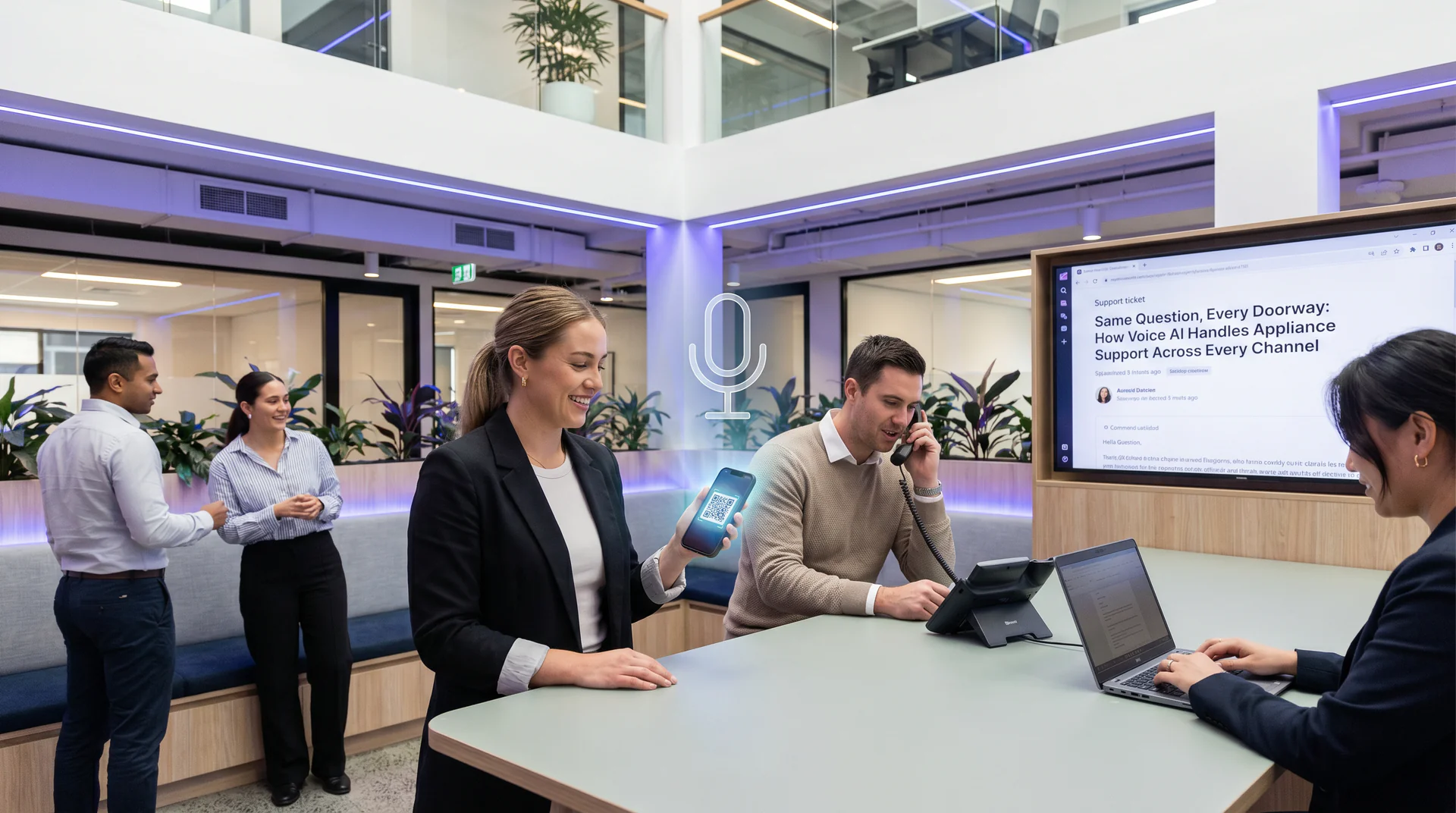
A genie deployed across your appliance support channels doesn’t just answer one touchpoint. It’s the same brain, same knowledge base, same voice, across all of them.
Here’s what that looks like in practice.
The Phone Call at 7pm
Maria calls. The genie picks up immediately. No hold music. No queue.
She says she has an E15 code on her dishwasher. The genie knows exactly what that means because your knowledge base has the full troubleshooting guide for every model you carry. It asks her which model she has. She tells it. The genie walks her through the fix specific to that model, step by step, in plain language.
If that doesn’t resolve it, the genie offers to book a service appointment or escalate to a technician for a callback during business hours. Maria chooses the callback. The genie captures her name, number, model, and the steps already tried. Your tech gets a clean brief in the morning.
The Web Chat at 9pm
If Maria had landed on your support page instead, the embedded widget is the same genie. Same knowledge base. Same troubleshooting flow. The only difference is text instead of voice.
She types “E15 code dishwasher.” The genie identifies the error, confirms the model, and walks through the same fix. If she’s already called earlier, she might mention it. The genie can capture that context and flag it for the morning team.
No human needed. No wait time. No inconsistent advice.
The QR Code on the Door
A lot of appliance retailers are now shipping products with QR codes on the inside panel or the installation card. Scan it, get instant support.
That QR code can point directly to the genie. The customer scans it mid-installation, asks about the kickplate alignment, and gets an answer in 30 seconds. No Google. No YouTube rabbit hole. No call to a store that’s closed.
This is where genie appliances channel deployment starts to feel less like support and more like a product feature.
The Email Overnight
Some customers will always email. That’s fine. With the right integration, the genie can handle first-response email triage. It reads the incoming message, identifies the product and the issue, and sends back a structured reply with the relevant troubleshooting steps.
If the issue needs a human, the email gets flagged and routed with context already attached. Your team shows up Monday morning to a sorted inbox, not a pile of identical E15 questions.
The Consistency Factor
Here’s what the channel spread problem really costs: trust.
When a customer gets three different answers across three channels, they stop trusting your product and your support. They go to a Facebook group or a Reddit thread. They leave a review that mentions “confusing and unhelpful support.” That review doesn’t say “the second agent gave slightly different advice.” It just says “avoid.”
One genie means one answer. The knowledge base is the single source of truth. Whether Maria called at 7pm, chatted at 9pm, or emailed at midnight, she gets the same troubleshooting steps in the same order with the same tone.
For voice AI appliances deployment, consistency is the competitive edge. Not speed, not availability (though both matter). Consistency.
Outcome: What This Looks Like at Scale
Small appliance businesses that deploy a genie across multiple channels typically see a few things happen quickly.
First, after-hours volume gets answered instead of lost. Industry estimates put after-hours call abandonment in retail appliances at 30-50% depending on the season. During peak periods (post-holiday, early Q1 when new appliances are being installed), that number climbs. A genie handles every one of those calls without adding staff.
Second, repeat contacts drop. When a customer gets a clear, correct answer the first time regardless of which channel they used, they don’t call back three times. Businesses report repeat contact rates falling by 20-40% after deploying consistent cross-channel support.
Third, your technicians and service staff spend less time on basic troubleshooting. The genie filters out the E15 calls that resolve with a filter clean. Your techs get the calls that actually need them. That means fewer unnecessary service dispatches, which in appliance businesses can cost $80-150 per visit when they’re avoidable.
For a small business handling 40-60 support contacts per week, that adds up fast.
What the Genie Doesn’t Replace
To be clear: a genie doesn’t replace your technicians or your customer relationships. It handles the repeatable stuff so your people can handle the rest.
When Maria’s dishwasher genuinely needs a service visit, the genie gets her booked and briefed. When a customer has a complex warranty dispute, the genie routes it to the right person with full context. The genie isn’t the end of the conversation. It’s the start of a better one.
And because every conversation gets logged and analyzed, you start to see patterns. Which error codes come up most? Which product lines generate the most support volume? Which questions are never answered by your current knowledge base? That data shapes better FAQs, better product documentation, and better technician training.
That’s the appliances channel spread benefit most businesses don’t see coming: the insights, not just the answers.
See It Working for Appliances
If you run an appliance retail, repair, or service business and you’re still routing the same question across three different humans on three different channels, the fix is simpler than you think.
One genie. Same brain. Every doorway.
See how it works for appliance businesses at /appliances, or run your own numbers at the ROI calculator to see what missed after-hours calls and repeat contacts are actually costing you.