 Use Case general
 The Lot Is Open Even When You Aren't
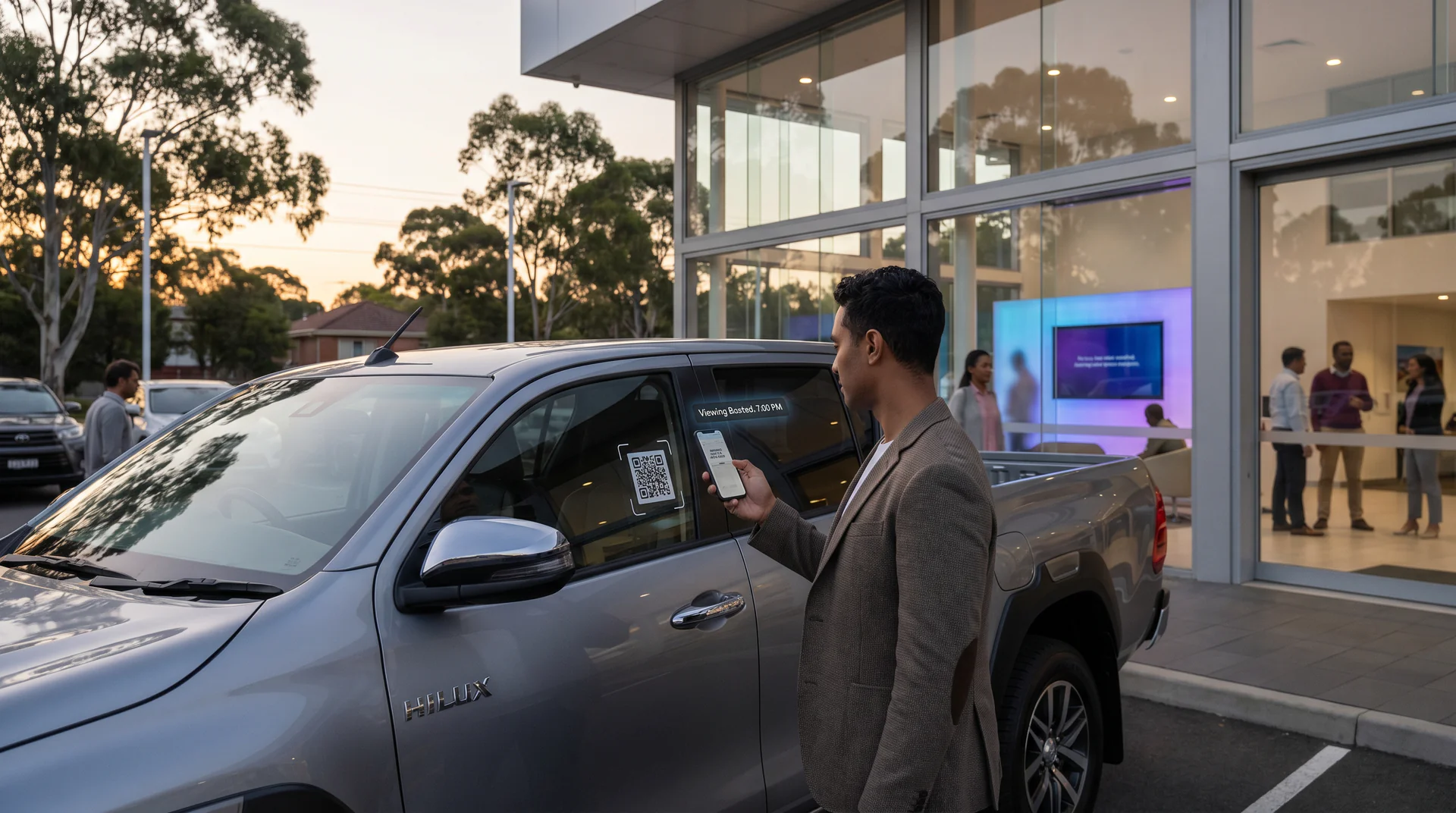
A customer scans a QR code on a Hilux at 7pm, gets pricing, warranty info, and books a viewing. Voice AI for automotive after-hours lots.
 Help Genie
 7pm on a Tuesday
The showroom lights are off. The sales team left at 5:30. The lot is quiet.
But there’s a guy walking the rows.
He found you on Google Maps during his lunch break. He’s been thinking about a ute for three months. Now he’s here, on his own time, moving between vehicles with his phone torch on. He stops at the Hilux. He walks around it. He likes it. He takes a photo of the window sticker.
Then he leaves.
No name. No number. No appointment. No sale.
You’ll never know he was there.
This happens more than most dealers realize. Industry estimates suggest 30-40% of dealership lot visits happen outside business hours, especially at smaller suburban and regional yards where long commutes and work schedules push buyers into evenings and weekends. The lot is visible. The stock is there. But nobody is.
That’s the gap.
What Fails Without a Genie
The traditional answer to after-hours inquiries is a phone number on a sign. Maybe a website URL. Both require the buyer to do something tomorrow, from somewhere else, when the impulse has cooled.
Most don’t.
The moment a customer walks away from your lot without booking or leaving contact details, the odds of converting them drop sharply. They’ll Google the same model on the drive home. They’ll see a competitor’s ad. They’ll get busy. The window closes.
For small dealers especially, this is a compounding problem. You don’t have a BDC team. You don’t have a 24-hour sales line. You have one or two salespeople who are, reasonably, not answering calls at 8pm on a weeknight.
So the lot sits there. Full of stock. Completely silent.
What Happens When Every Windscreen Has a QR Code
Here’s the scenario again, but this time your genie is deployed on the lot.
Every vehicle has a QR sticker on the windscreen. One sticker. Takes about 20 seconds to apply. That’s the only hardware involved.
The same guy is walking your rows at 7pm Tuesday. He stops at the Hilux. He scans the sticker.
His phone opens a voice conversation with your genie. It’s branded to your dealership, speaks in your tone, knows your stock.
He asks: “What’s this priced at?”
The genie answers immediately. Not a PDF. Not a redirect to a contact form. An actual spoken answer with the current asking price, finance options if you’ve listed them, and any current promotions.
He asks: “What does the warranty cover?”
The genie walks him through it. Manufacturer warranty, any dealer warranty extensions you offer, what’s included for a vehicle at this age and mileage.
He asks: “Can I come see it Thursday?”
The genie books it. It captures his name, his number, his preferred time. It fires an alert to your sales inbox. It sends him a confirmation.
That whole conversation takes about 60 seconds.
He goes home. But this time, he goes home committed. Thursday is in his calendar. Your salesperson walks in Wednesday morning to a booked appointment with a qualified buyer who already knows the price, already knows the warranty terms, and already chose the vehicle.
That’s the difference.
How the Genie Actually Works
The genie pulls from your knowledge base. You upload your current stock list, pricing, warranty documentation, and any FAQs your team answers daily. That’s it.
When a buyer scans the QR code on a specific vehicle, the genie is already oriented to that unit. It knows the make, model, year, price, and specs because you’ve loaded that information. It’s not guessing. It’s not hallucinating. It’s answering from your actual documentation.
If a buyer asks something the genie doesn’t have a clear answer to, it doesn’t bluff. It captures the question and routes it to your team with a follow-up flag.
The lead capture piece is built into the conversation naturally. The genie doesn’t ask for a name and number upfront like a gate. It earns it. By the time a buyer is asking about a viewing time, they’re already engaged. Handing over contact details feels like the obvious next step.
Every conversation is logged. You get a transcript, the questions asked, the vehicle they were looking at, and the lead details. If you want to follow up before Thursday, you have everything you need.
The Numbers That Matter
You don’t need a lot of after-hours bookings for this to pay for itself.
One extra deal per month from an after-hours lead capture is, at average gross margins on a used ute or SUV, a meaningful number. Dealer gross per unit on used vehicles typically runs in the $2,000-$4,000 range depending on the market and segment. Even at the conservative end, one incremental deal covers the cost of a Professional plan genie for a full year.
Most dealers who deploy on their lot report that the first booked appointment tends to come within the first two weeks. The ROI conversation gets short very quickly.
Beyond direct sales, there’s the qualification angle. Buyers who engage with the genie before a visit arrive with real intent. They’ve already asked their questions. They’ve already seen the price. They’re not browsing. That compresses the sales cycle and reduces time your team spends on tire-kickers.
There’s also the competitive visibility angle. For smaller dealers sitting alongside larger franchise groups, the ability to respond to a buyer at 7pm Tuesday the same way a big group can is a real differentiator. The buyer doesn’t know if your genie is backed by a team of 5 or 50. They just know someone answered.
Who This Is For
This use case lands hardest for:
Independent and used car dealers. No BDC. No overnight staff. Lots that close at 5:30 and reopen at 9. The gap between those hours is where leads go quiet.
Regional and suburban yards. Buyers in these areas often work long hours or commute. Evening and weekend browsing is common. The lot is visible but the team isn’t there.
Small new car dealers with tight staffing. Even franchise dealers with single-point operations deal with after-hours gaps. A genie on the lot fills that window without adding headcount.
Dealers managing multiple lots. One genie, multiple locations. Each QR code is linked to the relevant vehicle and location context.
Setting It Up
The process is straightforward. You don’t need a developer.
Upload your stock list, pricing documentation, warranty terms, and any FAQs your team regularly handles. Customize the genie’s voice and tone to match your dealership brand. Then print and apply QR stickers to each vehicle on the lot.
If you update stock, you update the knowledge base. The genie reflects the changes immediately.
You can also configure the genie to handle multiple entry points. The same genie that lives on your lot QR codes can sit on your website, handle inbound calls after hours, and respond to inquiries from your Google Business Profile. One setup. Multiple channels.
For the automotive-specific setup and how other dealers are using this across their operations, see the automotive industry page.
The Lot Works Harder Than You Do
The stock is already there. The buyer is already there. The only thing missing is someone to talk to.
A genie on every windscreen means that Tuesday evening buyer doesn’t walk away. He scans, asks his questions, books his time, and shows up Thursday ready to buy.
The lot is open even when you aren’t.
If you want to see what the numbers look like for your specific lot size and average deal value, run it through the ROI calculator. Or head to /explore to see how a genie is deployed and what it sounds like in action.