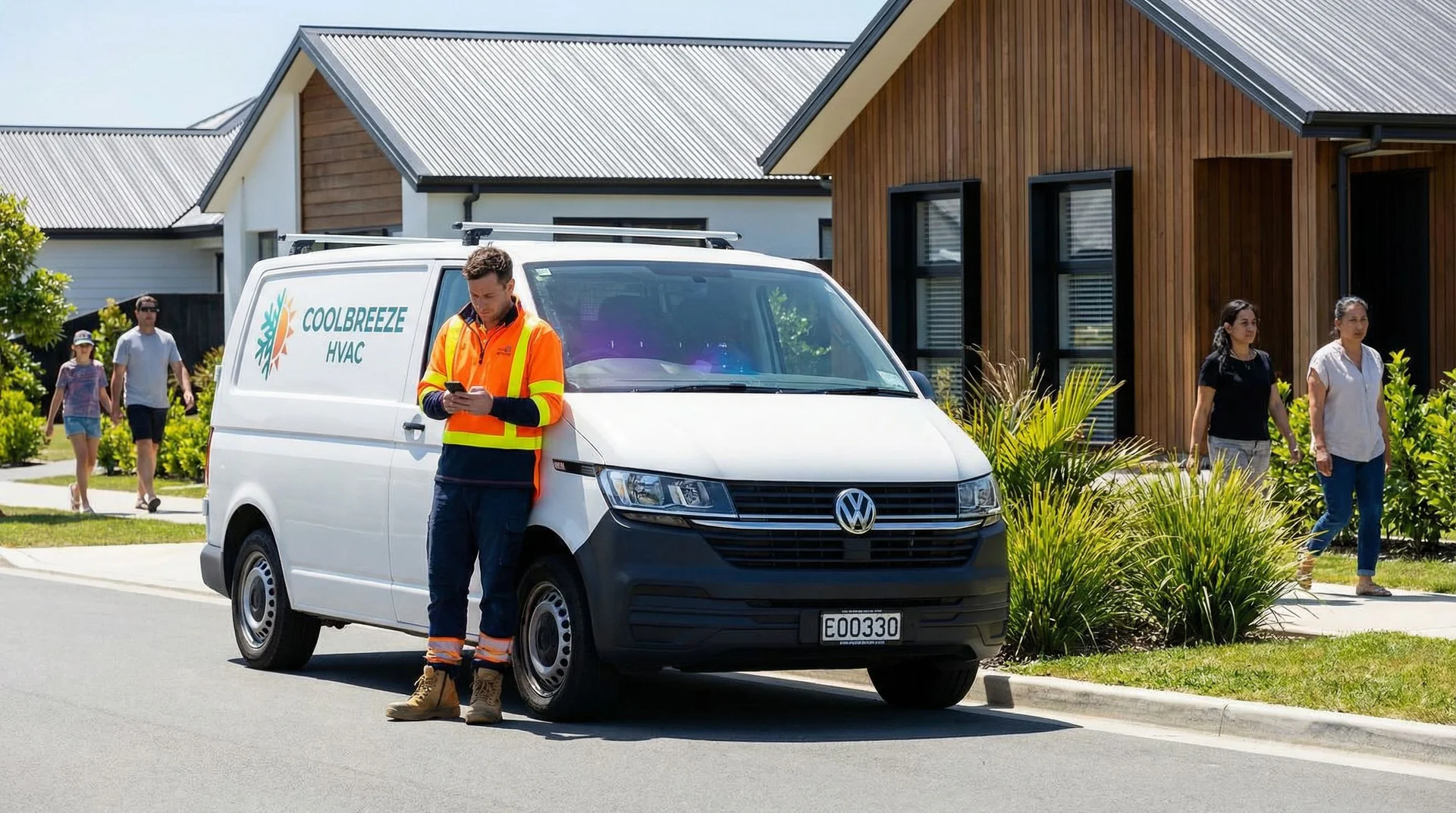
Why HVAC Companies Need AI Emergency Call Handling Before the Next Heat Wave
HVAC companies face 5-8x call volume spikes during extreme weather. Learn how AI emergency call handling captures every lead and dispatches faster.

When temperatures climb above 100°F, your phone doesn’t ring. It floods. HVAC companies that can’t answer every call during a heat wave don’t just lose revenue. They hand customers directly to the competition. The math is brutal: a single missed emergency call during peak season can represent $300 to $15,000 in lost business.
AI emergency call handling for HVAC isn’t a futuristic concept. It’s what separates the companies that dominate their market during extreme weather from those that scramble to keep up.
The Seasonal Spike Reality No One Plans For
Most HVAC companies know their busy seasons. Few are truly prepared for them. When a sustained heat wave hits, call volume can spike 5-8x above normal, overnight. A team that handles 40 calls on a slow Tuesday suddenly faces 250 on a Wednesday when the forecast hits 104°F.
The problems stack up fast:
- Staff can’t keep up with incoming volume
- Hold times stretch past 10 minutes
- Callers hang up and dial a competitor
- After-hours emergencies go straight to a voicemail nobody checks until morning
- Dispatchers take incomplete information because they’re rushing through calls
- Hold times stretch past 10 minutes during spikes
- After-hours calls go to voicemail
- Callers hang up and dial a competitor
- Dispatchers rush through calls, missing key details
- Configured 24/7 intake without waiting for a shared human operator
- Structured emergency triage in under 2 minutes
- Callers confirmed and queued, no one lost
- Dispatchers receive complete, actionable information
The trades industry has always dealt with this feast-or-famine demand pattern. What’s changed is that customers have zero tolerance for wait times when their elderly parent has no air conditioning or their infant’s room is hitting 90°F indoors.
What AI Emergency Triage Actually Looks Like
The right AI doesn’t just answer the phone. It thinks. When a customer calls at 11 PM saying their AC stopped working, a well-configured AI emergency responder asks the questions that matter before any human dispatcher is ever involved.
The Emergency Responder on the HVAC subcategory page handles exactly this scenario. Its opening approach: “HVAC emergency? I understand how uncomfortable that is. Tell me what’s happening and I’ll get you help.” From there, it works through a structured triage:
- What’s the situation? No cooling, no heat, or something else?
- Who is in the home? Elderly residents, infants, anyone with medical conditions?
- What’s the current indoor temperature?
- What does the system look like? Is it running, making noise, or completely dead?
That last set of questions isn’t just about urgency. It gives your dispatcher actionable information before they pick up the phone to call the customer back. A tech arriving to a home with a 78-year-old resident in a house that’s already 92°F inside is arriving with a very different priority than a routine no-cooling call.
The AI distinguishes what matters: no AC with vulnerable residents in extreme heat is a true emergency. A unit making a strange noise on a 72°F day is a next-available appointment. This triage happens in under two minutes, at any hour, without a dispatcher in the loop.
The Revenue Protection Math
Average HVAC service calls generate $300 to $800 per visit. Emergency dispatch premium rates can push that higher. A full system replacement, often triggered by a catastrophic failure that could have been caught earlier, runs $5,000 to $15,000.
Now consider a heat wave that lasts five days. If your company misses 20 calls per day because lines are overwhelmed, and even half of those callers would have spent $400, that’s $20,000 in lost revenue from a single weather event. Across a full summer, the pattern compounds.
AI call handling doesn’t eliminate your need for skilled dispatchers and technicians. It ensures that every call that comes in gets captured, triaged, and queued so your human team can focus on the work only humans can do.
After-Hours Coverage: Where HVAC Companies Lose the Most
The 9 PM call on a hot night is where most HVAC companies bleed money. A voicemail system catches it. The customer leaves a message, or more likely doesn’t, and calls the next company. By morning, you’ve lost a customer who might have been worth $800 today and a service contract worth thousands over the next decade.
The Emergency Responder genie operates 24 hours a day without a wage, a sick day, or a bad attitude at midnight. It greets callers with genuine empathy, collects the information your dispatcher needs, and for true emergencies, can trigger immediate escalation protocols. For non-emergencies, it schedules the next available appointment and sends a confirmation so the customer knows they haven’t disappeared into a voicemail void.
This after-hours coverage isn’t just about capturing revenue. It builds the reputation that pays compound dividends: the HVAC company that picked up when everyone else’s lines were busy becomes the company customers call first next time.
After-hours AI coverage doesn't just capture tonight's revenue. It builds the reputation that earns you the first call next time. The HVAC company that answers at 10 PM during a heat wave earns customers for life.
The Comfort Consultant: Turning Service Calls into System Sales
Not every call during a heat wave is an emergency. Some callers have aging systems that are struggling. Running constantly, barely keeping up, cycling irregularly. These are customers who are one bad summer away from a full replacement. They just don’t know it yet.
The Comfort Consultant handles these conversations differently. When a customer calls about a system that’s “not keeping up,” the Comfort Consultant collects home size, the current system type, age of the equipment, and what their comfort goals are. It walks through system options like central air, heat pumps, and mini-splits, then explains efficiency ratings in terms that make sense to a homeowner.
This isn’t about pushing a sale on a stressed customer. It’s about having an informed conversation so that when your sales tech arrives, the customer is already educated and the visit moves faster toward a decision.
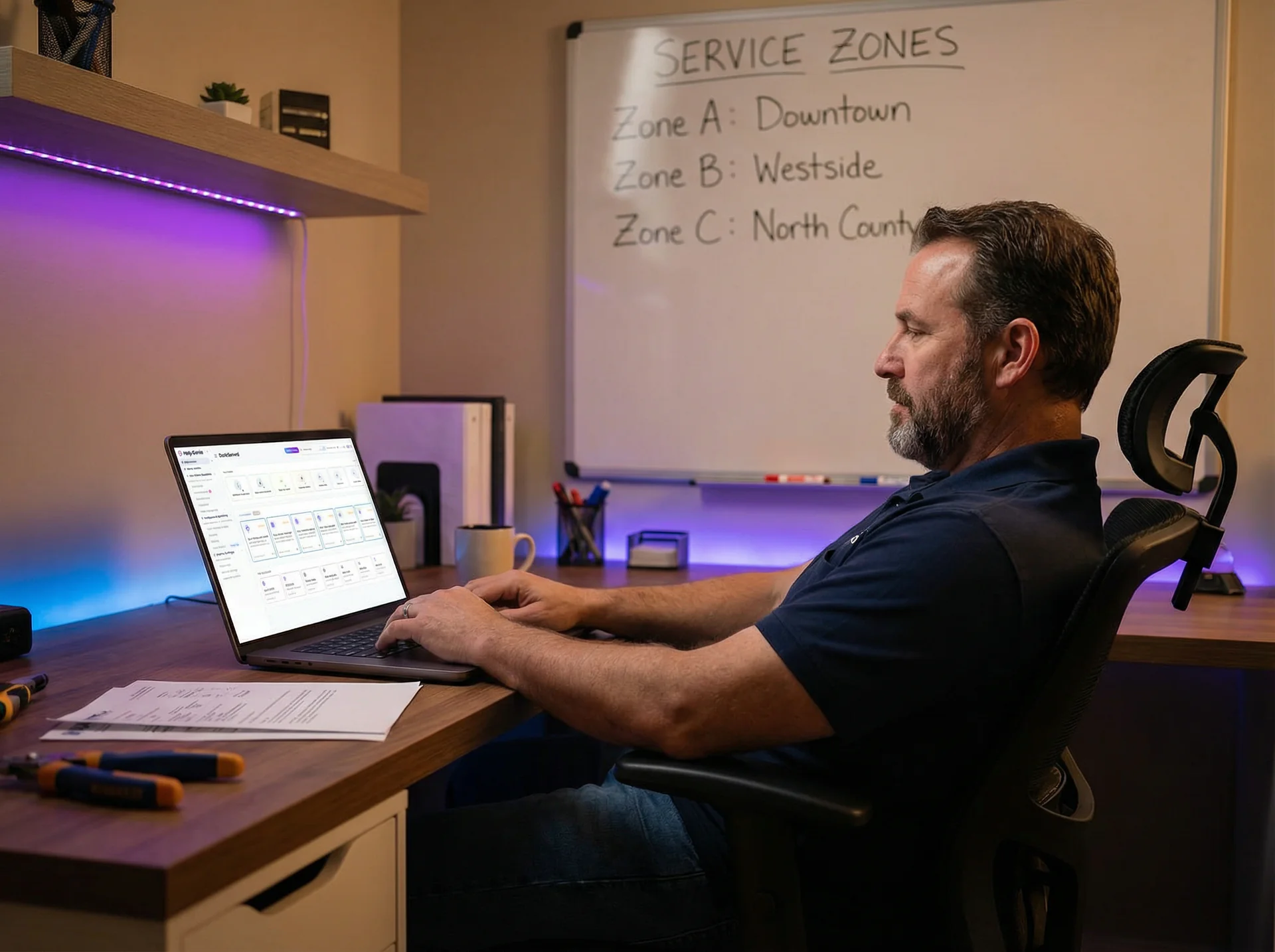
Try the Emergency Responder, your AC/heating emergency specialist to see how it handles urgent calls.
Maintenance Plans: The Long Game
Heat waves create urgency. AI can use that urgency constructively. Callers with aging systems, or callers who’ve just had a repair, are prime candidates for seasonal maintenance plans. A well-timed mention (“By the way, we offer a maintenance plan that includes two tune-ups per year and priority scheduling during peak season”) captures upsell revenue that would otherwise never come up in a rushed dispatch call.
The Maintenance Reminder genie handles ongoing outreach to existing customers, but the opportunity to introduce maintenance plans starts at the first call. AI handles this naturally, without the awkwardness of a dispatcher trying to sell while also coordinating a dispatch.
Competitive Positioning That’s Hard to Replicate
AI call handling creates something competitors can’t easily match. A reputation for reliability exactly when reliability is hardest to deliver.
Any HVAC company can answer calls on a 75°F Tuesday. The ones that answer on the first ring during a 105°F heat wave at 10 PM earn customers for life. Those customers tell their neighbors. They leave reviews that mention the company “actually picked up.” They don’t comparison shop the next time they need service.
The trades industry is relationship-driven. AI doesn’t replace those relationships. It ensures they start well.
If your HVAC company is heading into summer without a plan for handling call volume spikes, now is the time to change that. See how Help Genie’s HVAC genies handle emergency triage, after-hours calls, and maintenance plan conversations at hvac.
You might also find useful context in our broader look at how AI is transforming the trades industry.
Help Genie Tips
Get more from your voice genie

Build on-call schedules for after-hours routing
Different team members on different nights? Configure on-call schedules so your genie always routes calls to whoever is available, without you lifting a finger.

Set different genie behavior for after-hours calls
Your genie can act differently at night. Triage emergencies, collect more info from callers, or simply take messages. You control what happens when the office is closed.

Sync appointments to Google Calendar or Outlook
When your genie books a showing, service call, or consultation, it can push the appointment directly to your calendar. No double-booking, no manual entry.

Clone and customize genies for different locations or roles
Running multiple locations or departments? Clone an existing genie, swap the details, and deploy. Each genie gets its own number, knowledge, and branding.
Ready to try it?
Set up a voice genie for your business in minutes.
Keep exploring
Further reading and useful tools
Best AI Receptionist for HVAC Companies in 2026
The best AI receptionist for HVAC companies in 2026. An honest roundup of options for emergency triage, after-hours dispatch, and seasonal call surges.
ComparisonAI vs Human Receptionist for HVAC Companies
Comparing AI and human receptionists for HVAC businesses. Covers emergency triage, seasonal surges, after-hours calls, and cost.
GuideAI Answering Service for Australia: A Complete Setup Guide
How Australian service businesses deploy voice AI genies on local numbers — AUD pricing, Sydney and Melbourne context, after-hours triage, and a practical path to go live.
GuideAI Receptionist for New Zealand Businesses: A Practical Setup Guide
How Kiwi trades and service businesses deploy a voice AI genie on NZ phone numbers — NZD pricing, local spelling, after-hours triage, and a six-step path to go live.
Case StudyBlueLine Plumbing: After-Hours Voice AI Triage for Auckland Trades
How an Auckland plumbing firm used a branded voice genie to capture after-hours emergencies and routine bookings — illustrative scenario with example metrics.
Use CaseYour Parts Catalogue Shouldn't Live Inside One Person's Head
When your best counter person goes on leave, the whole counter struggles. Here's how a voice AI genie reads your full parts catalogue so your team doesn't have to.
Help Genie
The Help Genie Team
The Help Genie team builds voice AI genies that resolve everyday support on their own — across phone, chat, web, and email — in your voice, 24/7. We write about what we learn shipping it to real businesses.
Building voice AI for 11+ industries, from trades to hospitality.
- voice AI
- customer support
- lead capture
- multi-channel genies