How AI Call Routing Keeps Safety and Compliance Inquiries From Falling Through the Cracks
Safety and compliance calls in industrial settings carry legal and operational weight. AI call routing identifies and escalates these inquiries instantly, preventing OSHA citations and workplace incidents.

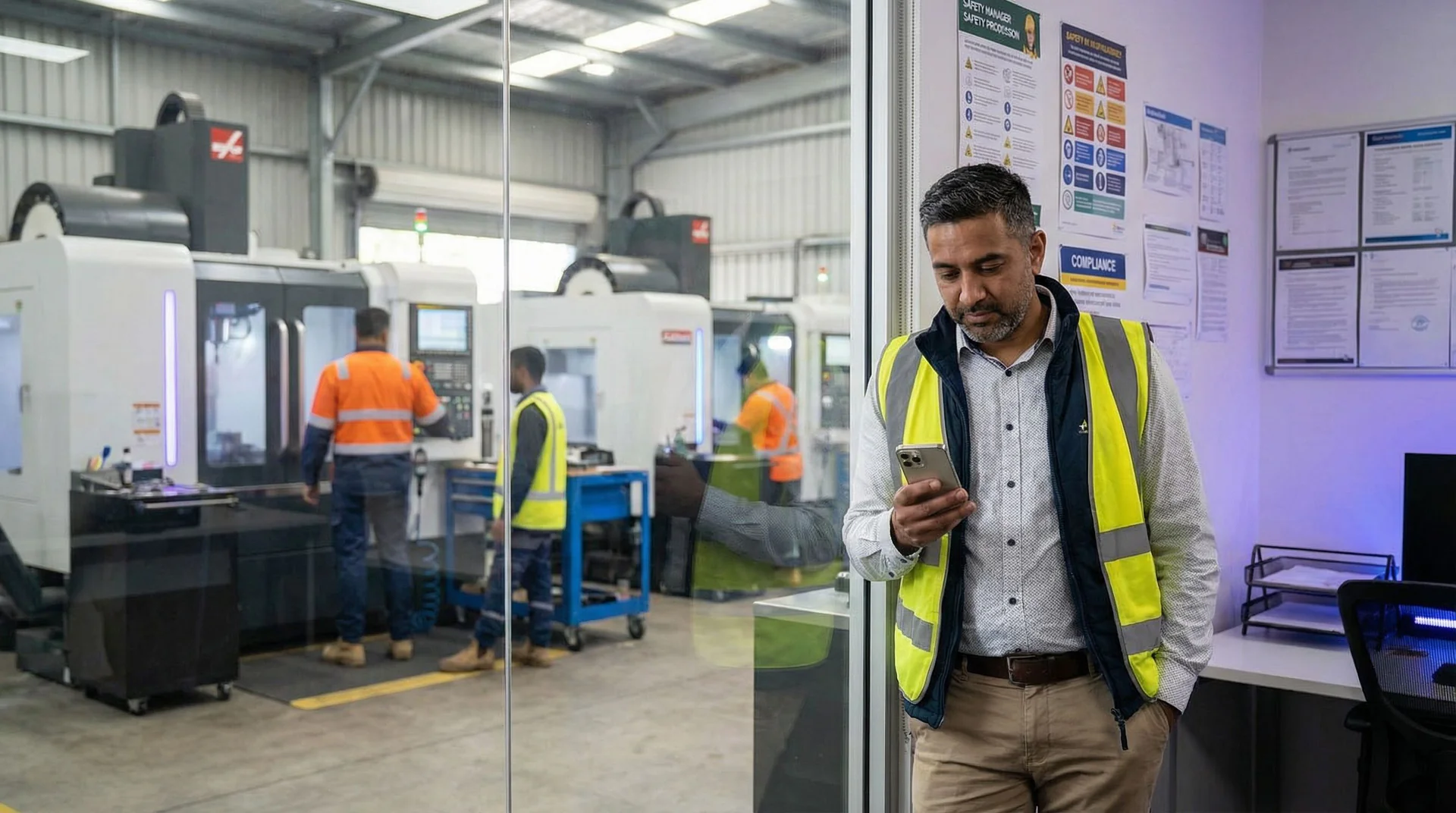
A plant safety manager calls your industrial equipment dealership at 4:47 PM on a Friday. She’s reporting a hydraulic leak on a press that’s creating a slip hazard, and she needs to know if the replacement seal is covered under the service agreement or if this falls under a recall. Your front desk puts her on hold. The call drops. Monday morning, you’ve got an OSHA inspector on-site and a customer who’s already talking to your competitor about switching service providers.
That’s not a hypothetical. Safety and compliance inquiries in the industrial sector carry consequences that no other call type matches. A missed warranty question costs you a sale. A missed safety inquiry can cost someone their health, and cost your business its reputation.
Why Safety Calls Get Lost in the First Place
Industrial equipment dealerships and service providers handle dozens of call types daily: parts orders, service scheduling, warranty claims, technical questions, sales inquiries. Safety and compliance calls represent a small percentage of total volume, maybe 3-5% of inbound traffic. But they carry disproportionate weight.
The problem is that most phone systems and front desk staff have no mechanism to distinguish a compliance inquiry from a routine service call. Both start the same way: “Hi, I’m calling about our Model 7200 press.” One caller needs a PM scheduled. The other is reporting a safety defect that could trigger a product liability claim.
Without a way to identify and prioritize these calls, they enter the same queue as everything else. They sit in voicemail over weekends. They get returned in the order they were received, not in the order of their urgency. And when a compliance-related call sits unanswered for 48 hours, the legal and operational exposure compounds with every passing hour.
The industrial equipment space is particularly vulnerable because the equipment itself can cause serious harm when it malfunctions. A faulty safety interlock on a stamping press, a leaking hydraulic line on a forklift, or a failing pressure relief valve on a compressor are not maintenance annoyances. They’re potential injury events.
How AI Identifies Compliance and Safety Calls in Real Time
Voice AI doesn’t just answer the phone. It listens for specific language patterns and context clues that signal a safety or compliance issue. When a caller mentions terms like “leak,” “injury,” “OSHA,” “recall,” “safety interlock,” “lockout tagout,” or “pressure failure,” the AI immediately changes its routing behavior.
The Escalation Agent is built for exactly this kind of triage. Instead of placing the caller in a standard queue, it does three things simultaneously: captures every detail of the reported issue, classifies the call as safety-critical, and triggers an immediate notification to the appropriate person on your team.
This happens in seconds, not hours. The caller doesn’t sit on hold. They don’t get transferred three times. They don’t leave a voicemail that won’t be checked until Monday.
The Compliance Documentation Trail
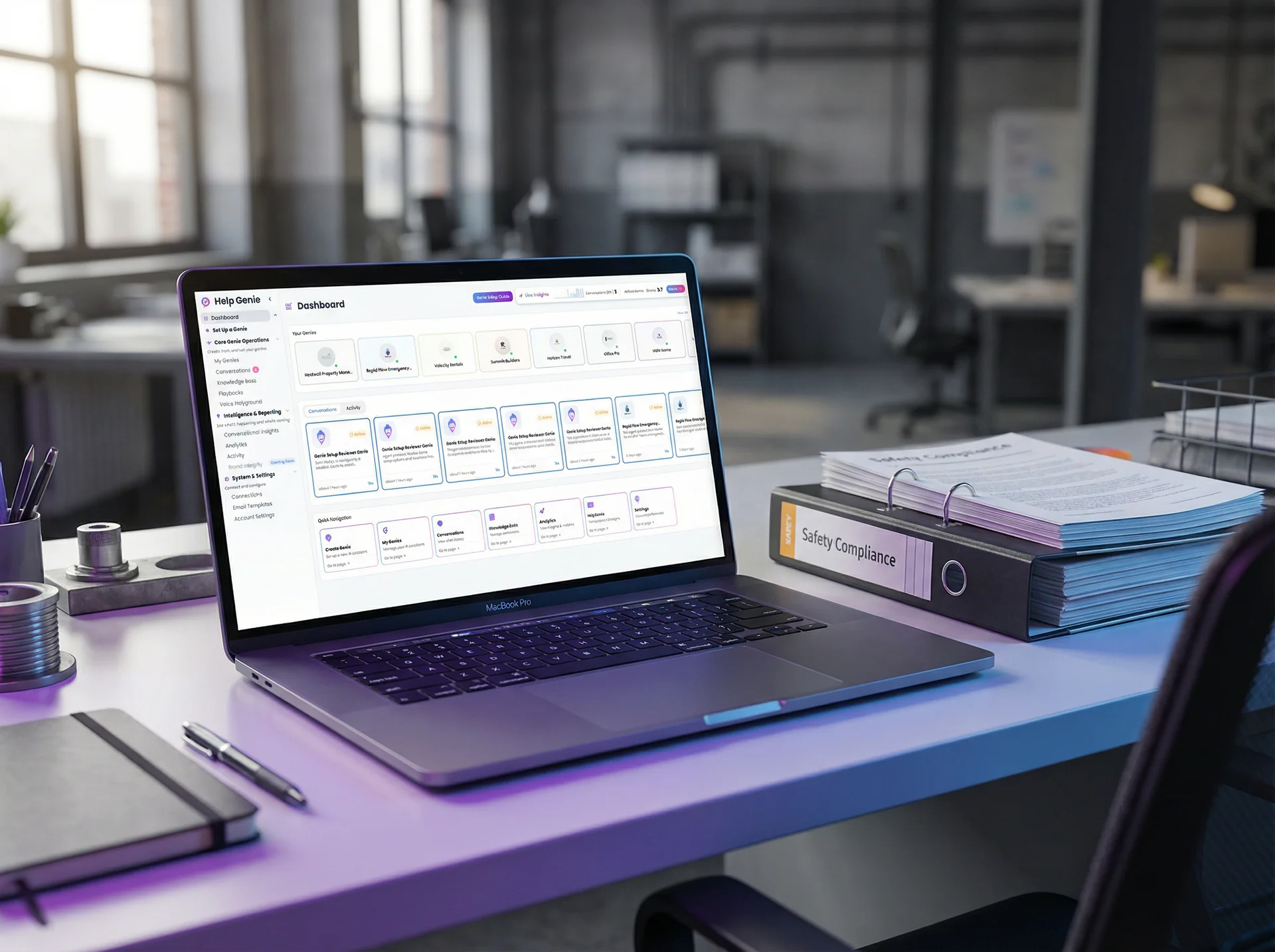
Beyond routing, AI creates something that most phone systems completely lack: a reliable documentation trail. Every safety-related call gets transcribed, time-stamped, and stored with the caller’s reported details.
This matters enormously when regulators come knocking. OSHA investigations frequently ask for records of when a safety issue was first reported and what actions were taken in response. If your only record is a sticky note on someone’s desk or a voicemail that got deleted, you’re in a weak position.
AI-generated call records include the exact time of the report, the caller’s description of the issue, the equipment involved (including model and serial number when provided), and the routing action taken. This isn’t just good practice. In a regulatory or legal proceeding, having a timestamped, detailed record of your response can be the difference between a warning and a six-figure penalty.
The Troubleshooter adds another layer by walking callers through diagnostic questions that help characterize the severity of the reported issue. Is the equipment currently isolated? Has anyone been injured? Is the area cordoned off? These questions serve a dual purpose: they help your team prepare the right response, and they document that your organization took the report seriously from the first moment.
After-Hours Safety Reporting: The Biggest Gap
Most industrial facilities run multiple shifts. Equipment failures and safety incidents don’t wait for 8 AM. But most equipment dealers and service providers shut down their phones at 5 PM, which means a second-shift supervisor reporting a safety concern at 9 PM gets voicemail.
That voicemail sits until the next business day. If it’s Friday night, it sits until Monday. If the reported issue involves an imminent hazard, the customer is left to handle it alone or call someone else.
AI eliminates this gap entirely. A voice genie answers at 9 PM the same way it answers at 9 AM. Safety-critical calls still trigger immediate escalation to your on-call personnel. The documentation trail still gets created. And the customer knows their concern was received and acted on, not filed in a voicemail box.
For the broader industrial sector, this after-hours coverage extends beyond equipment dealers to logistics operations and service providers. A logistics company dealing with a hazmat spill at a warehouse at midnight needs the same immediate response path that a factory reporting a machine malfunction at 2 AM requires.
- Safety calls mixed into general voicemail queue
- No way to distinguish compliance inquiries from routine calls
- After-hours safety reports sit until next business day
- No documentation trail for regulatory audits
- Response time measured in days, not minutes
- Safety keywords trigger immediate priority escalation
- Compliance calls classified and routed separately from general inquiries
- 24/7 coverage with real-time notification to on-call staff
- Every safety call transcribed, timestamped, and stored automatically
- Response time measured in seconds
Recall Management: When Every Affected Customer Needs to Hear From You
Product recalls in the industrial equipment space are rare but high-stakes. When a manufacturer issues a recall on a safety component, every dealer who sold that equipment needs to contact affected customers quickly. Simultaneously, customers who’ve heard about the recall start calling in.
The inbound surge during a recall event can overwhelm even well-staffed operations. Every caller wants to know if their equipment is affected, what the risk is, and when the fix will happen. AI handles this surge by verifying equipment model and serial numbers against recall databases, confirming whether the caller’s specific unit is affected, and scheduling the remediation service.
This keeps your phone lines from getting jammed while ensuring every affected customer gets accurate information. Your technical staff focuses on performing the actual recall repairs instead of spending their day on the phone explaining the same recall notice to 50 different customers.
Building a Safety-First Phone Culture Without Adding Headcount
Hiring a dedicated compliance coordinator to monitor phone lines is expensive and still only covers one shift. Training every front desk employee to recognize safety-related language and route it correctly is time-consuming and prone to turnover-related gaps.
AI provides consistent, tireless classification across every call, every hour, every day. It doesn’t forget the training. It doesn’t miss a keyword because it was distracted by another task. And it doesn’t go home at 5 PM.
The Cost of Getting It Wrong
The financial exposure from mishandled safety and compliance calls extends well beyond OSHA fines. Product liability claims, workers’ compensation increases, lost customer contracts, and reputational damage all compound when a safety inquiry falls through the cracks.
Consider the full chain: a customer reports a malfunctioning safety guard on a piece of equipment you sold and service. The call goes to voicemail. Two days later, an operator is injured. The investigation reveals that the customer reported the issue and got no response. Your organization now faces potential liability not just for the equipment defect, but for the failure to respond to a known hazard report.
AI doesn’t prevent equipment failures. But it prevents the second failure, the organizational one, where a reported problem goes unacknowledged and unaddressed.
Making It Work for Your Operation
The setup isn’t complicated. Industrial equipment voice genies are configured with the specific safety terminology, compliance frameworks, and escalation paths relevant to your equipment types and customer base. OSHA reporting categories, manufacturer recall protocols, and your internal safety response procedures all get built into the routing logic.
Your existing team doesn’t change how they work. They just start receiving safety-critical calls faster, with better documentation, and without the risk that a Friday afternoon voicemail turns into a Monday morning crisis.
Safety and compliance calls are the highest-stakes calls your industrial business receives. They deserve a response system that matches their urgency. See how Help Genie’s escalation agent for industrial equipment identifies and routes safety-critical inquiries in real time.
Try The Escalation Agent to see how AI classifies and routes a safety inquiry from the first word.
Help Genie Tips
Get more from your voice genie

Route urgent calls to a real person instantly
Set up smart transfer rules so your genie hands off to the right team member when it detects urgency, a VIP caller, or a question it cannot answer. Conference or warm handoff.

Cover nights, weekends, and holidays automatically
Your genie picks up every call outside business hours, qualifies leads, handles emergencies, and books appointments for the next morning. No answering service needed.

Capture exactly the info you need from every caller
Define custom fields your genie should collect: budget, timeline, property type, vehicle make, service needed. Every call ends with structured data, not a scribbled note.

See full transcripts and sentiment for every conversation
Review what callers asked, how your genie responded, and whether the conversation was positive. Spot trends, refine your genie, and improve over time.
Ready to try it?
Set up a voice genie for your business in minutes.
Keep exploring
Further reading and useful tools
Scheduling Preventive Maintenance Calls With AI for Industrial Equipment Providers
Industrial equipment providers lose revenue when preventive maintenance appointments slip through the cracks. Learn how AI voice genies handle scheduling requests, send reminders, and capture equipment details before a technician arrives.
BlogAI for Industrial Equipment Parts & Service Calls
When industrial equipment goes down, production stops. See how AI captures parts model and serial numbers, triages service urgency, and answers 24/7.
GuideVoice AI for Industrial Operations: The Complete Guide
How logistics, warehousing, and industrial equipment firms use voice AI genies to catch every shipment, parts, and service call around the clock.
Use CaseOne Multi-Language Source of Truth for Every Frontline Worker
How a voice AI genie gives your entire frontline workforce real answers in their own language. No translation lag, no nod-and-smile.
ComparisonBest AgentZap Alternatives (2026)
Honest roundup of AgentZap alternatives for AI receptionists. Compare minute-based AI, flat-rate voice genies, and human answering services.
ComparisonBest Smith.ai Alternatives (2026)
Honest roundup of the top Smith.ai alternatives, from human answering services to flat-rate voice AI. Compare pricing models and find the right fit.
Help Genie
The Help Genie Team
The Help Genie team builds voice AI genies that resolve everyday support on their own — across phone, chat, web, and email — in your voice, 24/7. We write about what we learn shipping it to real businesses.
Building voice AI for 11+ industries, from trades to hospitality.
- voice AI
- customer support
- lead capture
- multi-channel genies